


Root Change -
Turn Action Into Identity
Change lasts when it’s not just something someone does, but who they believe they are. "Turn Action into Identity" is about guiding others to shift their self-view from “I do this” to “I am this kind of person,” embedding new behaviors into their core identity for lasting impact. Let’s start
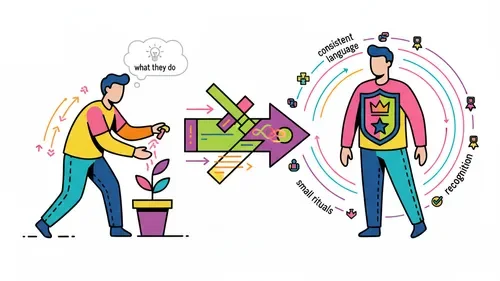
Quick Start Guide – Name, Link, Reinforce
Turning action into identity means helping someone see a behavior as part of who they are through a clear, science-backed process to anchor habits in self-perception. Here is how:
Name: Define a positive, aspirational identity tied to the behavior you’re guiding them toward. Frame it as “who they are” rather than “what they do” to create a sense of ownership and pride.
Link: Connect their daily actions to this identity through storytelling or reflection. Highlight specific moments where their behavior reflects this identity to make it feel natural and intrinsic.
Reinforce: Strengthen this identity with consistent language, small rituals, or recognition that embeds the self-view into their routine, ensuring the behavior sticks through personal alignment.

Examples: Turn Action Into Identity
Here are practical ways to apply this tool across relationships and goals.
Try a micro-challenge today to make growth a personal transformation.
For Leaders
Common Problem: “My team member tries new habits like giving feedback, but they don’t sustain them long-term.”
Name: Define their identity as “You’re a truth-teller who builds trust through honesty,” creating a positive self-view tied to feedback.
Link: After they give feedback, connect it to their identity by saying, “This is what truth-tellers do: your honesty just strengthened our plan!”
Reinforce: Strengthen this identity with a small ritual, like a “truth-teller moment” in meetings to share feedback wins, and offer recognition with specific praise, “Great job, truth-teller!” This evokes ownership by making the behavior a core part of who they are.
Micro-Challenge: Identify one behavior for a team member today (e.g., sharing updates), name an identity tied to it (e.g., “You’re a communicator”), link a recent action to it with a story, and reinforce with a small ritual or recognition (e.g., a shout-out) to root the behavior in their self-view.
For Parents
Common Problem: “My child starts routines like helping with chores but quickly loses interest.”
Name: Define their identity as “You’re a helper who makes our home better,” creating a prideful self-view tied to contributing.
Link: After they complete a chore, connect it to their identity by saying, “This is what helpers do, look how tidy this is because of you!”
Reinforce: Strengthen this identity with a small ritual, like a family “helper cheer” after tasks, and offer recognition with a sticker or high-five as “Helper of the Day.” This evokes ownership by making the behavior a natural part of who they are.
Micro-Challenge: Choose one behavior for your child today (e.g., tidying up), name an identity tied to it (e.g., “You’re a helper”), link a recent action to it with a story, and reinforce with a small ritual or recognition (e.g., a high-five) to root the behavior in their self-view.
Identity Shapes Behavior: Research shows that actions tied to self-view persist 32% longer than those focused solely on outcomes (James Clear, Atomic Habits, 2018). Seeing oneself as “a finisher” makes completing tasks feel natural, not forced.
Neural Rewiring: Neuroscience reveals that identity-based habits strengthen neural pathways in the basal ganglia, automating behavior through dopamine loops (Andrew Huberman, 2022). It’s not just mindset—it’s brain wiring.
Social Reinforcement Amplifies Impact: Framing identity in a social context (“we’re this kind of team”) boosts compliance by 35% via social norms (Robert Cialdini, Social Influence, 2022). Even personal identity gains strength from group alignment.
Self-Perception Drives Consistency: Studies indicate that when individuals align behavior with identity, they experience less internal resistance, increasing habit adherence (Dr. Wendy Wood, Good Habits, Bad Habits, 2019). Identity makes change feel authentic.
Emotional Connection Sustains Effort: Linking actions to a positive self-view taps into intrinsic motivation, sustaining effort over external rewards (Self-Determination Theory, Deci & Ryan, 2000). A meaningful identity keeps them committed.
Shaping Identity Evokes Ownership: Dan Heath’s Switch (2010) shows that evoking personal connection motivates more than logic. Modern strategies like storytelling and rituals help the brain predict pride and alignment over struggle (Lisa Feldman Barrett on emotion construction, 2017).
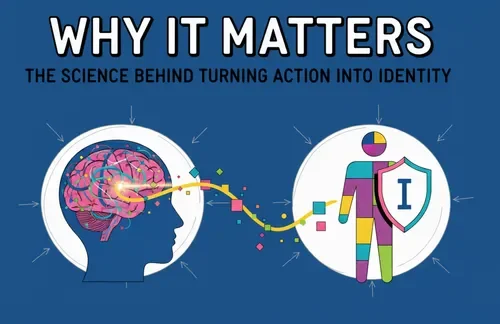
The Science Behind
Turning Action into Identit
NEXT: Rise After Falls
Navigate setbacks with a clear, science-backed process that anchors resilience.


BACK: Make it Social
An often underestimated change management tool to root the change.