

Build Habits That Stick
-
Most habit approaches fail because they focus on motivation and willpower - resources that naturally deplete. The latest science reveals a different pathway: habits form through environmental design, identity reinforcement, and neurological patterns that have little to do with motivation.
Research shows that approximately 43% of your daily actions aren't conscious decisions but automatic habits. Yet most people try to change behavior through conscious effort, fighting against their brain's efficiency systems rather than working with them.
This approach integrates newest research to create five powerful habit-formation systems, each addressing a different aspect of how habits actually form in the brain.
-
Habits determine outcomes more than intentions. Studies show that the quality of your habits predicts success more accurately than goals or motivation levels. While motivation fluctuates, habits create consistent action that compounds over time.
The neurological transfer is key. Research reveals that successful habits shift brain activity from conscious effort to automatic processing, freeing mental resources for other challenges.
Environment trumps willpower. Studies demonstrate that environmental factors influence habit formation more powerfully than self-control or discipline. The right environment makes good habits almost inevitable.
Identity reinforcement creates sustainability. Recent research shows that habits aligned with identity statements persist 32% longer than those focused solely on outcomes.
-
Youve come to the right place if you can recognize yourself in some of these patterns:
The Motivation Reliant: You successfully start behaviors when motivation is high, but slide back when it naturally wanes.
The All-Or-Nothing Perfectionist: You abandon habit goals after minor inconsistencies rather than adjusting and continuing.
The Environment Victim: Your surroundings constantly undermine your intentions with ill-timed temptations and obstacles.
The Resolution Repeater: You set the same habit goals year after year, never quite understanding why they don't stick.
This approach is especially valuable if you've tried traditional methods without lasting success or you're tired of the motivation-failure-guilt cycle.
-
Through six science-backed systems, you'll develop a comprehensive approach to habit formation:
Friction Mapping: Techniques to identify and eliminate the specific environmental factors silently sabotaging your habits while creating supportive cues.
Identity-Habit Integration: Methods to connect habits with your identity, creating behaviors that feel like authentic self-expression rather than imposed discipline.
Minimum Viable Habits: Strategies to scale habits to their smallest effective form, ensuring consistency while progressively building toward larger behavior patterns.
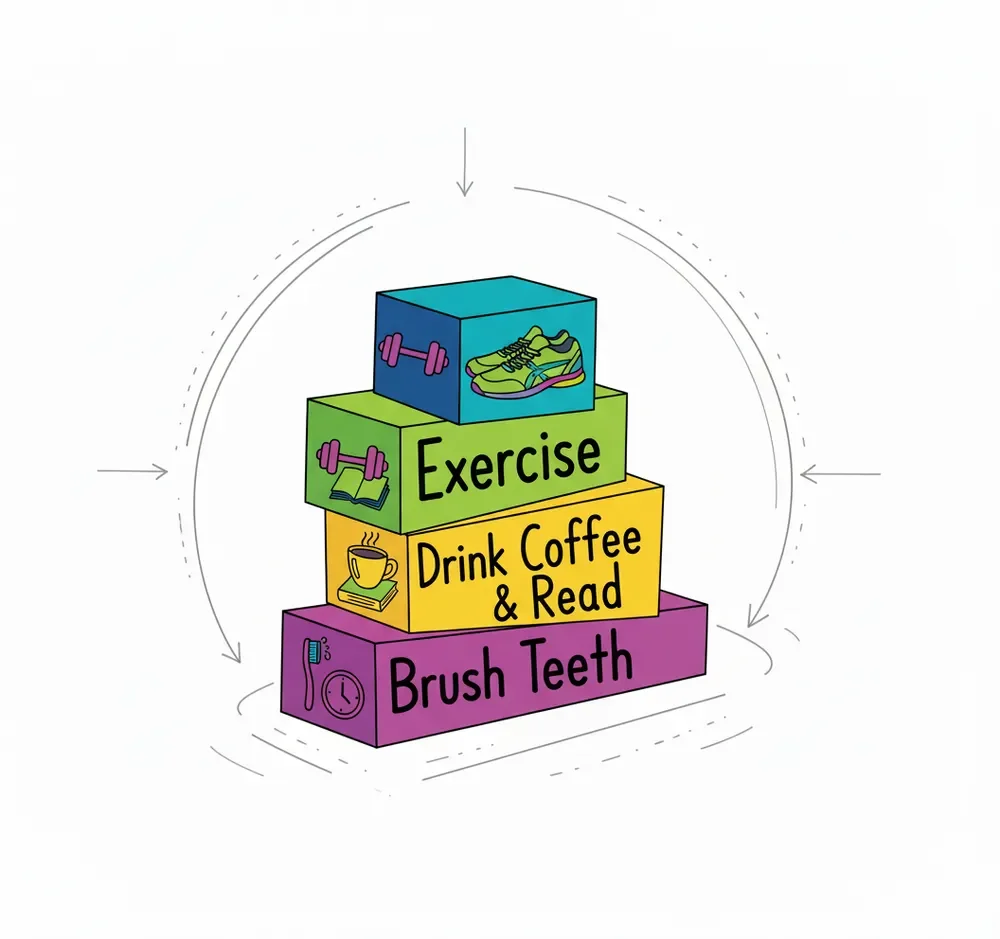
Habit Stacking: Systems for strategically anchoring new behaviors to existing habits, leveraging neural pathways that are already well-established in your brain.
Decision Fatigue Prevention: Approaches to minimize low-value decisions that drain your mental energy, preserving cognitive resources for choices that truly matter.
Habit Tracking: Personalized measurement systems to reinforce your goals, creating an additional layer of motivation that works with your brain's natural reward systems.
Environment Trumps Willpower
*
Environment Trumps Willpower *

Friction Mapping:
Discover the Hidden Force That Makes or Breaks Your Habits
Ever wonder why some habits feel like constant battles? Most likely, it is not motivation or discipline - it's friction.
Research by Dr. Wendy Wood reveals that our physical environment has up to 3x more impact on habit success than personality traits or willpower. High-friction environments can reduce habit compliance by 85% regardless of motivation, while low-friction setups can make even challenging habits surprisingly consistent. This is good news: It is not about trying harder - it's about designing smarter.
Let’s get started by systematically identifying and eliminating the specific friction points and creating an environment where good behaviors happen almost automatically.
Beyond Friction: The Missing Link in Lasting Habits
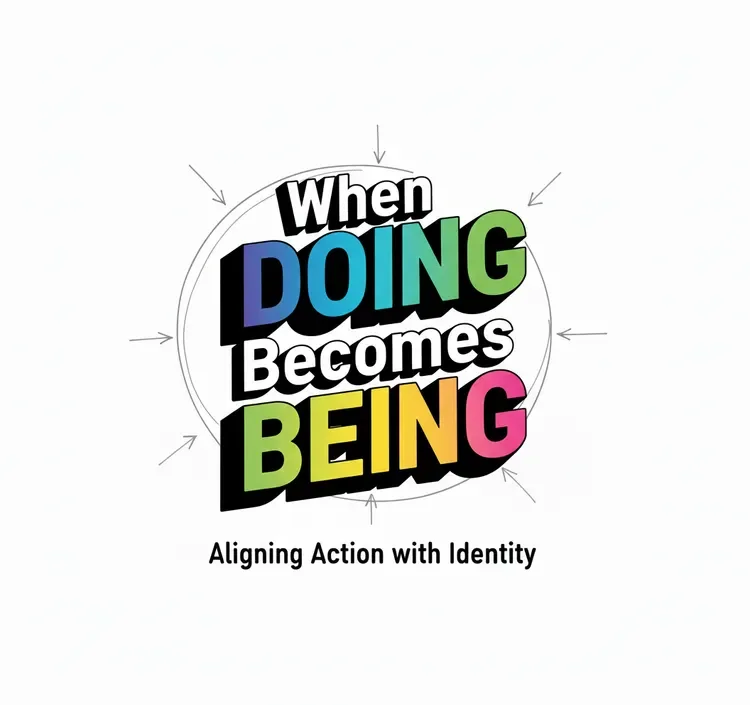
While reducing friction removes external barriers to habits, it is our identity that addresses the internal ones. The research is clear: even in perfectly designed environments, habits still fail when they conflict with how we see ourselves. Studies show that people who integrate habits into their identity maintain consistency 32% longer than those who focus only on outcomes or environment.
The most effective habit formation combines both approaches: (1) environmental design removes external barriers + (2) identity integration eliminates internal resistance. Together, they create a powerful foundation where good habits feel like authentic self-expression rather than imposed discipline.
This exercise helps you forge meaningful connections between key habits and your core identity, creating behaviors that persist not because they're easy, but because they're aligned with who you are becoming.
Minimum Viable Habits
The Power of Consistency
The most common habit mistake isn't lack of motivation - it's starting too big. Stanford research reveals that 80% of habit attempts fail because people aim for intensity when consistency is what rewires the brain.
Science shows that tiny actions performed daily create stronger neural pathways than ambitious actions done occasionally. A 2-minute daily practice that happens without fail builds more powerful behavior patterns than a 30-minute practice that occurs only when motivation is high.
This counterintuitive approach - what BJ Fogg calls "minimum viable habits"- flips conventional wisdom on its head. Instead of "go big or go home," the most successful habit builders start absurdly small and scale gradually only after consistency is locked in.
This exercise helps you identify the smallest version of each habit that still "counts," creating a foundation of consistency before building toward your ultimate goal.

Habit Stacking:
The Science of Behavioral Hitchhiking
Research reveals that habits linked to existing habits and routines are 50-80% more likely to stick than those based on time or place alone. This process is called habit stacking. It leverages neural pathways already established in our brain to make new behaviors nearly automatic. As neuroscientist Andrew Huberman explains, "When you pair a new behavior with an existing trigger, you're essentially hitchhiking on neural circuits that are already well-developed."
This exercise helps you identify your most reliable existing behaviors and strategically anchor new habits to them, creating an architecture where consistent behavior happens with minimal friction or motivation required.
Fewer Choices =
More Mental Energy
We are taught that more choices equal more freedom, but science reveals a surprising truth: the more decisions you make, the worse your choices become.
Research shows that each decision - big or small - drains a limited mental resource, creating "decision fatigue" that progressively impairs judgment. This explains why we're more likely to order takeout after making work decisions all day, why willpower crumbles in the evening, and why leaders like Steve Jobs wore the same outfit daily.
By the time we've made dozens of choices throughout your day, our brain's decision-making capacity has significantly diminished, regardless of how important our later decisions are.
This exercise helps you identify and eliminate the hidden decision points draining your cognitive resources, creating systems that preserve your mental capacity for truly important choices.

Eliminating Decision Fatigue
The Science of Streaks
Metrics That Motivate:
Your Personal Tracking System
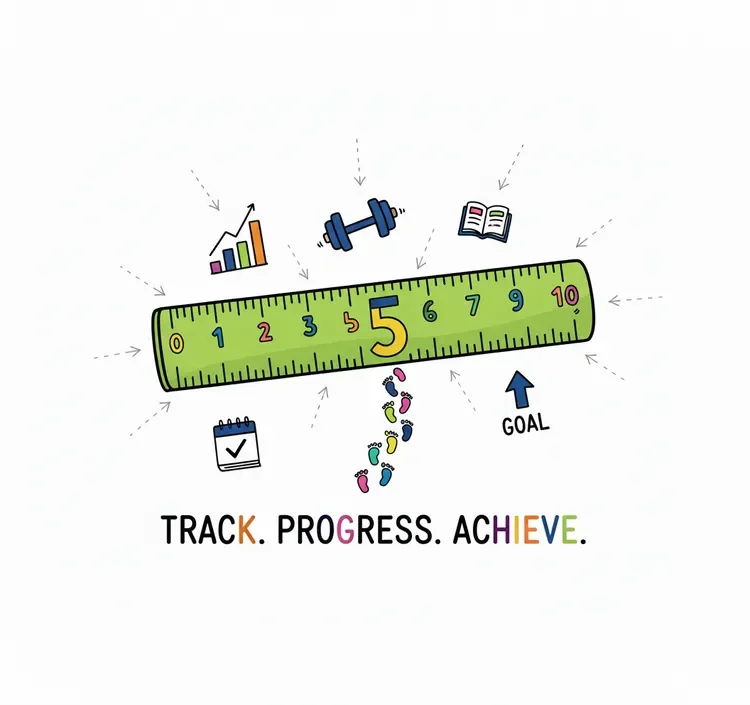
Ever notice how fitness apps love to highlight your "streak" of consecutive days? There is powerful behavioral science behind that design choice: Studies show that monitored habits are 33% more likely to persist than unmonitored ones - but only when tracking the right metrics for your specific habit type.
What most people miss: tracking streaks creates different behavior patterns than tracking percentages. Measuring time spent produces different outcomes than tracking completion. ‘
The metrics we choose literally reshape our habits.
This exercise helps you design a personalized tracking system based on science, creating a measurement architecture that works with your brain's natural motivation systems.

NEXT: Bounce Back & Repair Stronger
Why “Just Move On” Might be Wrong. Emotions are Key For Comeback.

BACK: Protect Your Time
& Energy
Design Your “I Will”-Boundaries to put yourself back in the drivers seat.