

Stay Calm Under Pressure
-
Have you ever known exactly what you should do in a pressure situation, but being hijacked anyway?
The racing heart before a presentation. The blank mind during a crucial conversation. The emotional reaction you immediately regret.
These aren't character flaws - they're predictable neurobiological responses when your threat system overrides your thinking brain. But the latest science shows you can change this pattern.
You can train your nervous system to stay regulated even when circumstances are challenging you. The secret: creating a buffer between pressure and response - with practice.
-
Most people either (1) avoid pressure or (2) power through it.
Both approaches fail.When you learn to regulate your response to pressure, research shows you:
Make clearer decisions (recovering up to 40% of cognitive capacity)
Preserve important relationships during tense moments
Maintain sustainable performance without burnout
Transform pressure from threat to opportunity
This isn't just about feeling better - it's about functioning better precisely when stakes are highest.
-
You'll recognize yourself here if you've experienced:
Important conversations derailing – You enter discussions with clear intentions but find yourself getting defensive or saying things you regret when tensions rise.
Sleep-stealing anxiety – Work challenges or difficult decisions hijack your thoughts at 3 AM, leaving you exhausted yet no closer to solutions.
Performance anxiety taking over – Whether speaking to groups or being evaluated, your capabilities get buried under a flood of nervous symptoms.
Conflict avoidance despite consequences – You know certain issues need addressing, but the discomfort leads you to postpone crucial conversations.
Decision fatigue – The sheer volume of choices leaves you mentally drained, making each subsequent decision more difficult than the last.
This approach bridges the gap between knowing what to do and actually doing it when pressure is high by providing science-backed techniques that work in real time, when you need them most.
-
Pressure doesn't just feel uncomfortable, it fundamentally changes how our brain and body function. These science-backed tools work with our biology, not against it:
Physiological Intelligence: Techniques to regulate your nervous system in real-time, giving you control over biological responses that typically hijack your intentions.
Cognitive Reframing: Methods to challenge thought patterns that amplify pressure, distinguishing between productive and unproductive stress.
Strategic Pauses: A framework for creating crucial space between stimulus and response, particularly during high-stakes moments.
Sustainable Capacity: Practices that build your pressure threshold over time, increasing resilience while expanding your capacity for exceptional challenges.
The result isn't freedom from pressure, it's freedom within it.
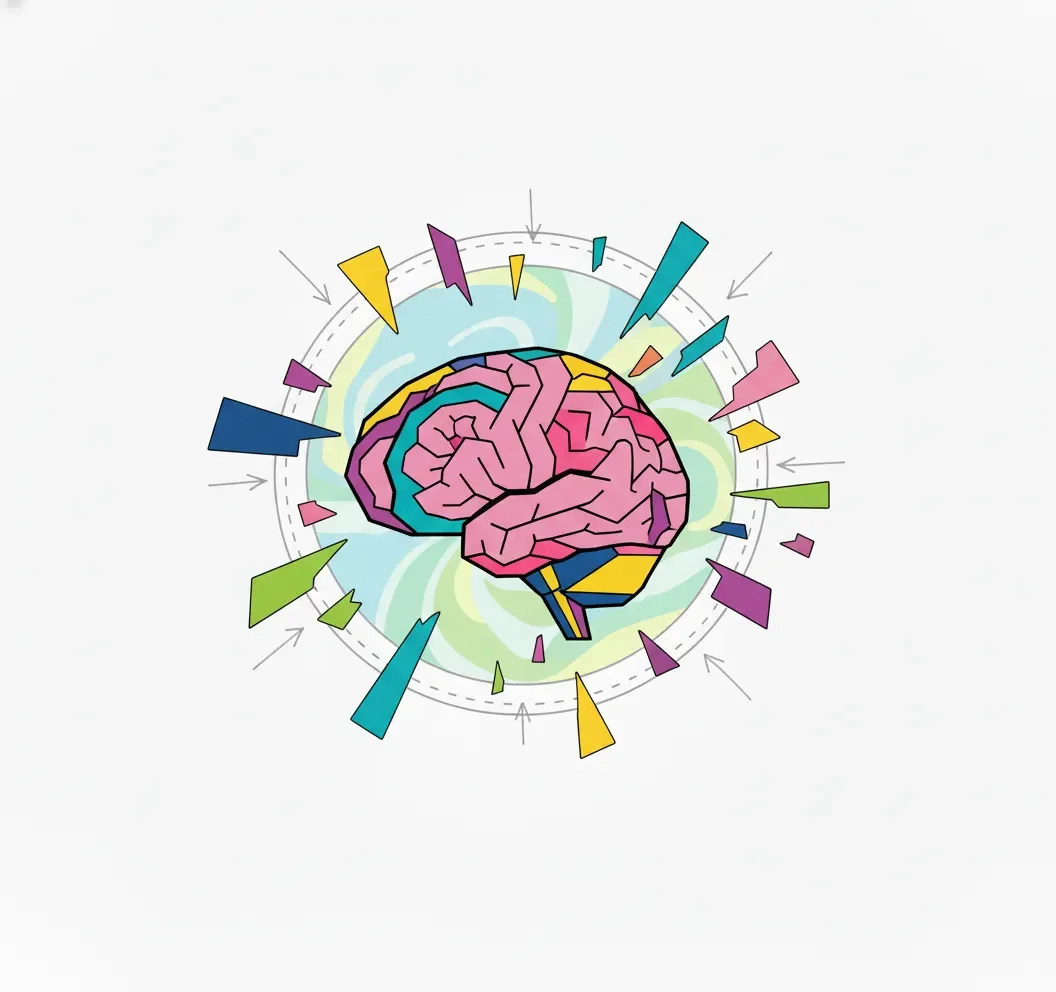
When pressure hits, our body responds before our conscious mind even registers it. Our heart rate increases, breathing becomes shallow, stress hormones flood our system, and our prefrontal cortex (home to our best decision-making) goes offline.
This isn't a character flaw; it's biology. Our nervous system is doing exactly what it evolved to do: prepare for threat. The problem today? This response is calibrated for physical dangers, not modern pressures like presentations, difficult conversations, or complex decisions - this is not live threatening, but it feels like that.
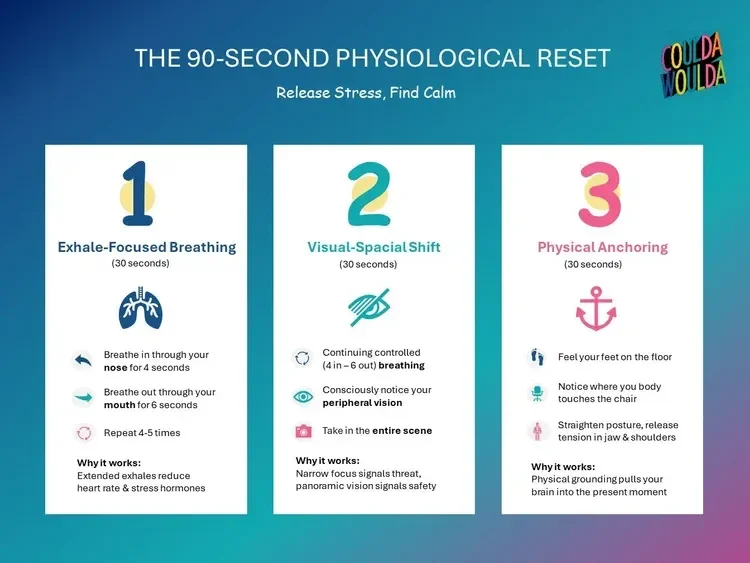
The good news: neuroscience research from Stanford and UCLA shows we can manually override this threat-system in as little as 90 seconds. Dr. Andrew Huberman's work demonstrates that specific physiological interventions directly affect vagal tone - the activity of our "calm and connect" nerve that regulates our stress response - activating our parasympathetic "rest and digest" system even while under pressure.
This exercise gives you a precision tool to reset your nervous system in real-time, allowing you to respond from choice rather than reaction when it matters most.
The 90-Second Reset:
Physiological Intelligence
in Action
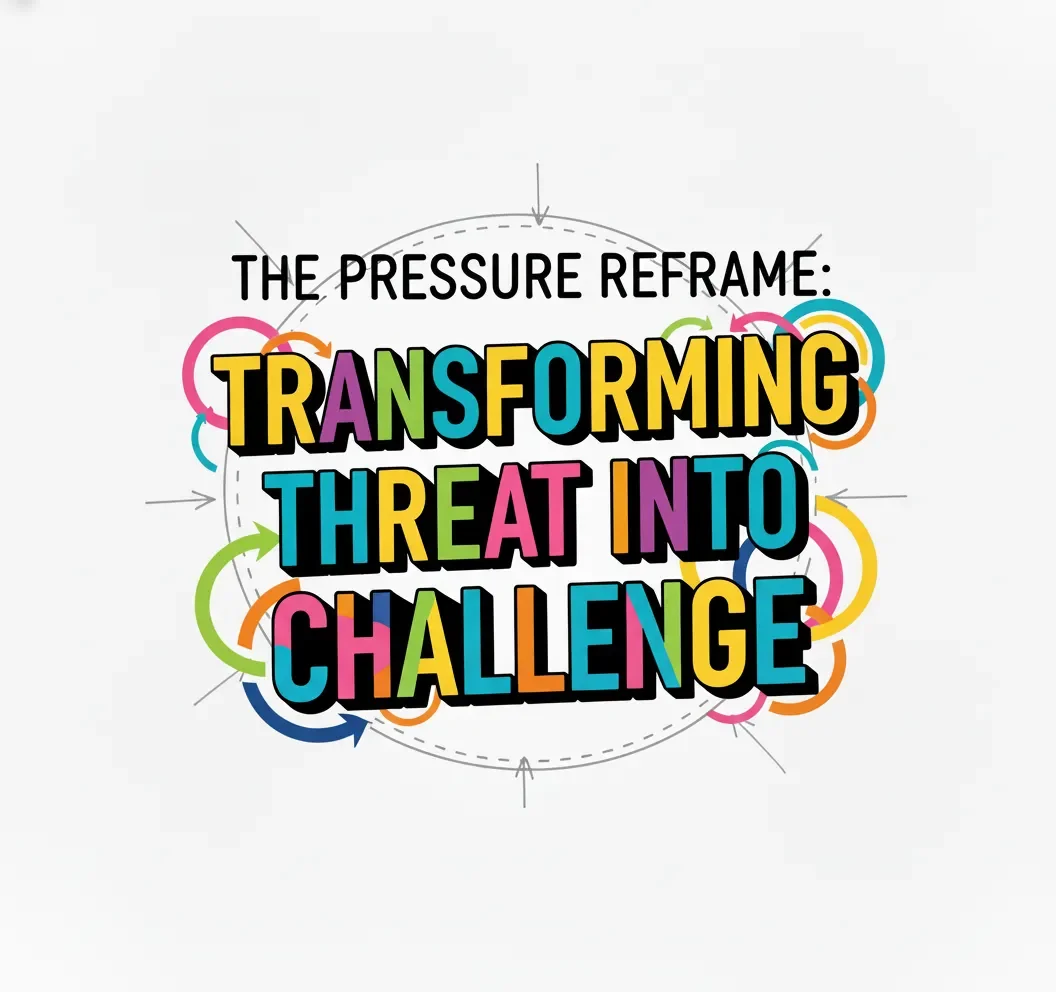
The world's top performers - from elite athletes to emergency room doctors - don't face less pressure than the rest of us, but they interpret it differently.
How you interpret pressure situations directly impacts your performance. Stanford research shows that viewing stress as performance-enhancing rather than performance-debilitating literally changes how your brain processes pressure. This isn't positive thinking; it's cognitive reappraisal, a science-backed technique that transforms pressure into opportunity.
People who reframe pressure as a challenge rather than a threat experience better cognitive function, improved cardiovascular efficiency, and greater access to creativity exactly when they need it most.
This exercise gives you specific reframing techniques to unlock capabilities that stress typically shuts down.
THE PRESSURE PAUSE *
THE PRESSURE PAUSE *
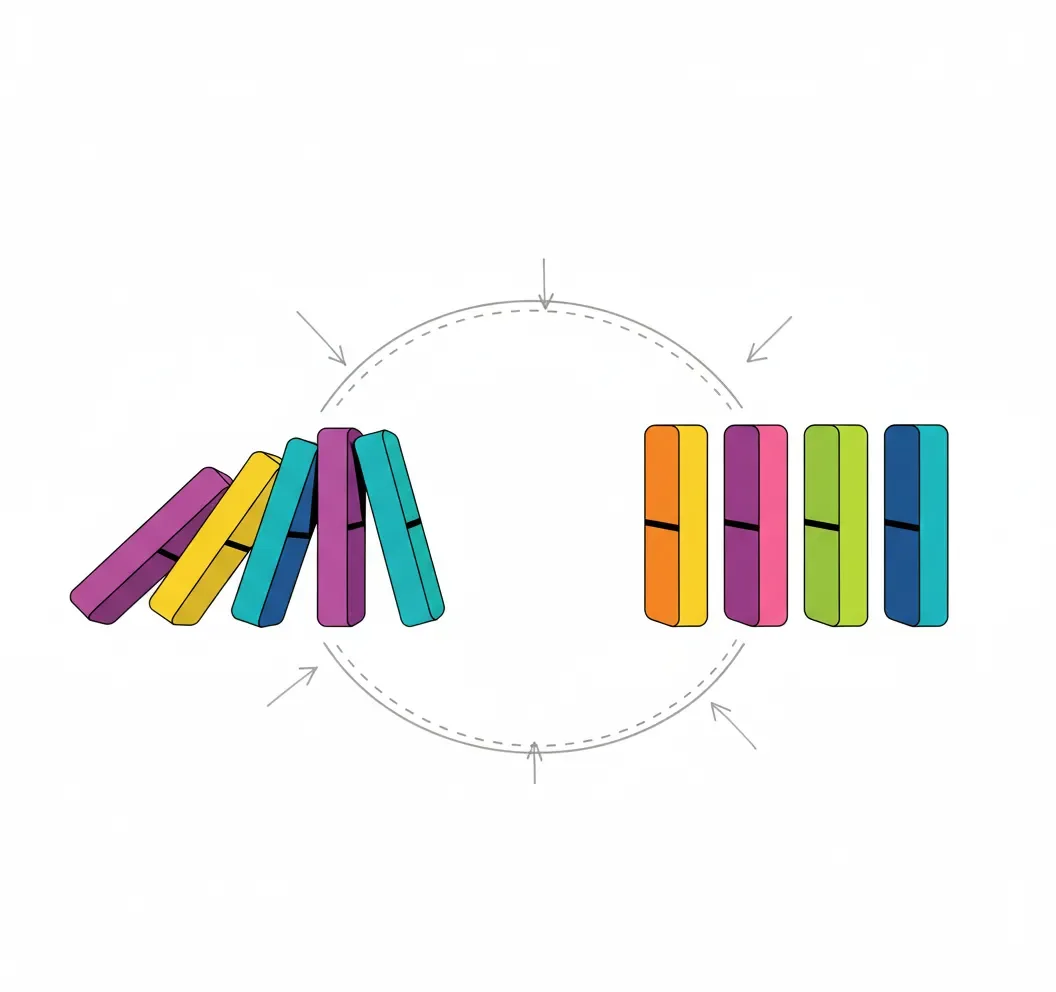
From Reaction to Response - The Power of the Pause
Even with regulated physiology and effective reframing, pressure situations still demand quick decisions with limited information. Most people either rush impulsively or freeze completely.
Research with emergency responders, military leaders, and executives shows that structured decision frameworks dramatically improve choices under pressure. The key difference between reactivity and effectiveness is a strategic pause that focuses attention on what truly matters.
This exercise provides a 90-second decision framework specifically designed for high-pressure moments when time is limited, stakes are high, and emotions are strong.
How Prep for the Pressure - Find Your Old Tapes and Change the Ending
The pause gives you a moment. But sometimes, even after the pause, the same reaction comes back. That's not a willpower problem. It's a pattern problem.
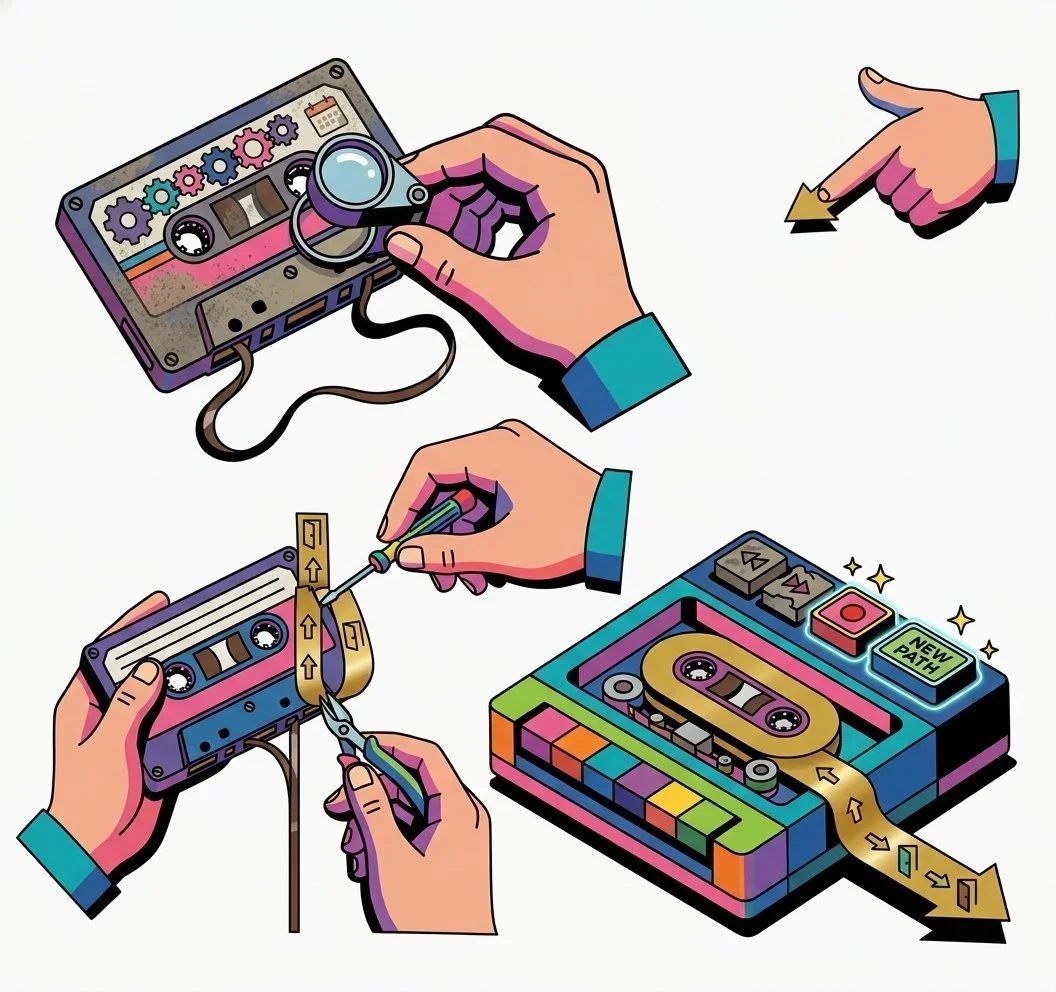
Your automatic reactions were learned - usually a long time ago, in situations where they made complete sense. The brain recorded them as the safe response. And now, under pressure, it plays that old tape automatically, before you've even had a chance to think.
The good news? Recordings can be changed. Not through trying harder. Through deliberate practice.
This three-part exercise helps you find the old tape, understand where it came from, and start rehearsing something new, until the new response becomes the automatic one.
Quick Reset Hacks for Your Nervous System
-
![]()
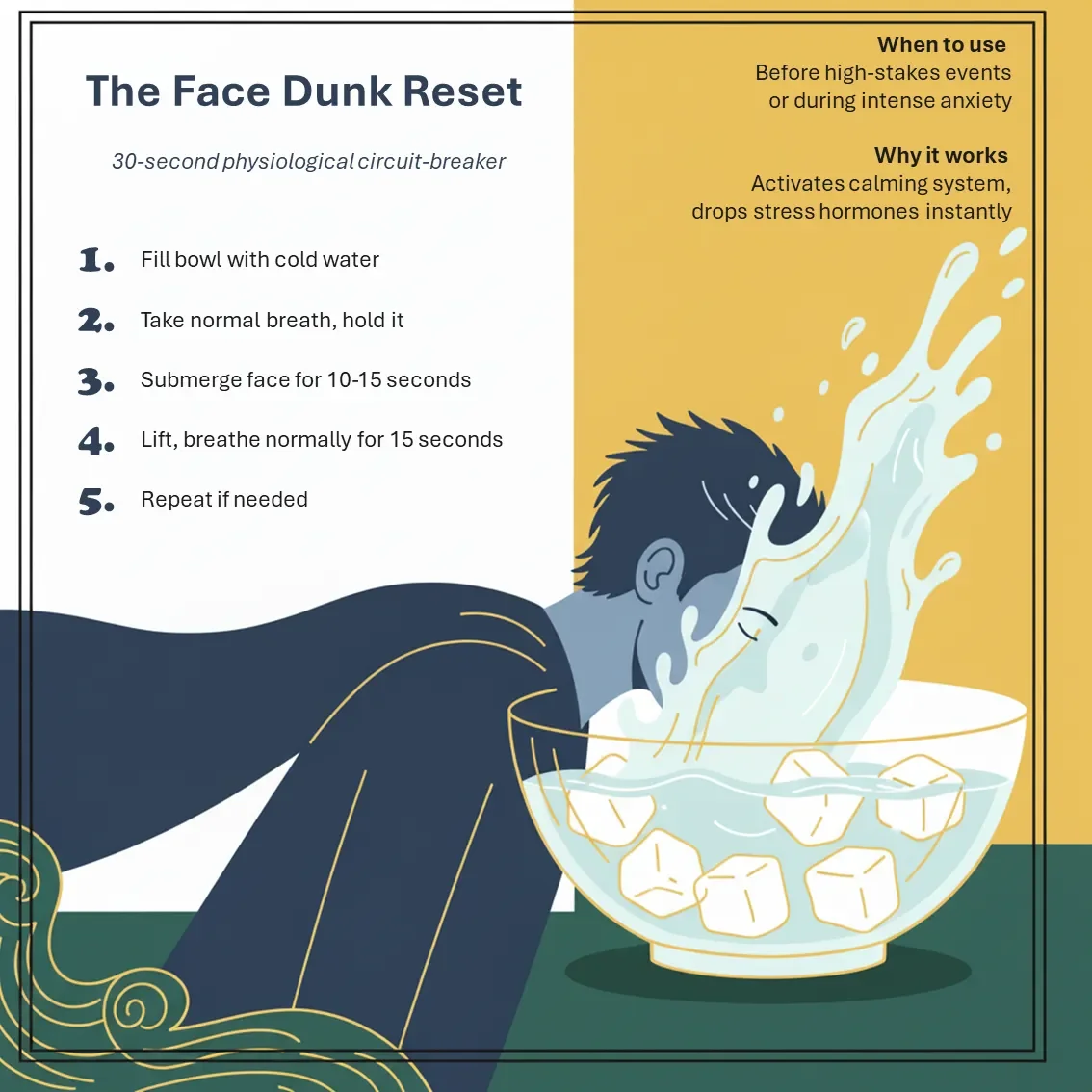
Face Dunk Reset
-
![]()
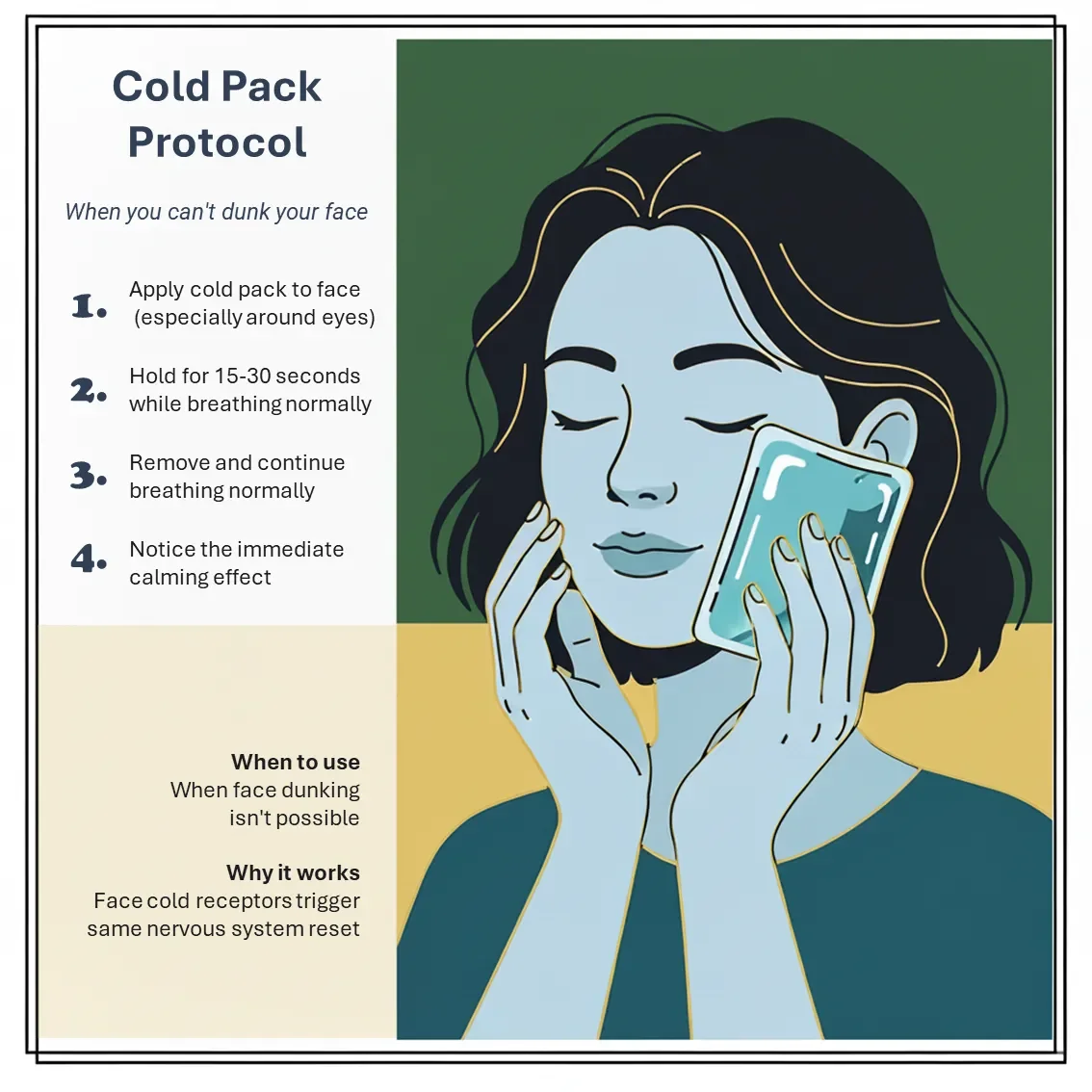
Cold Pack Protocol
-
![]()
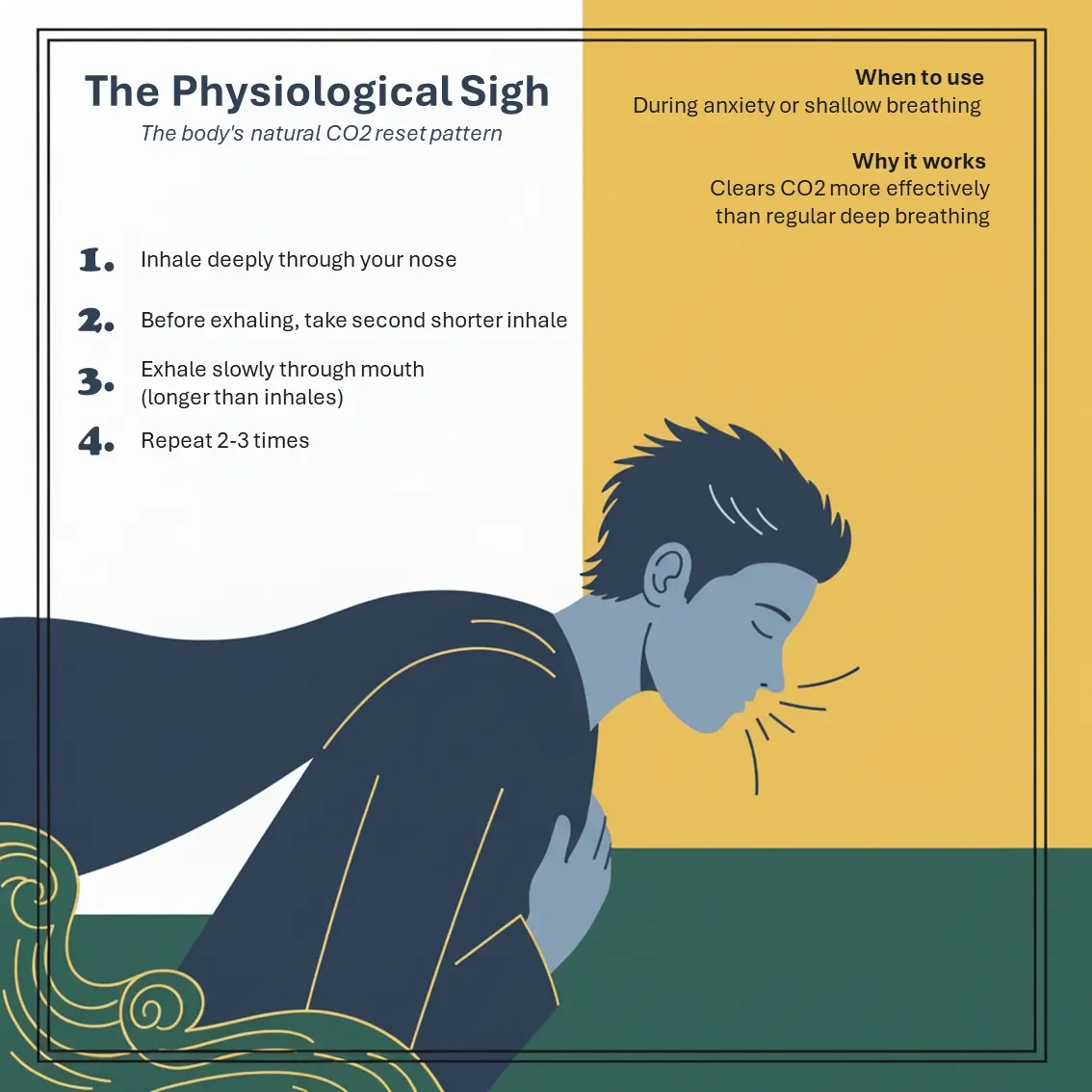
Physiological Sigh
-
![]()
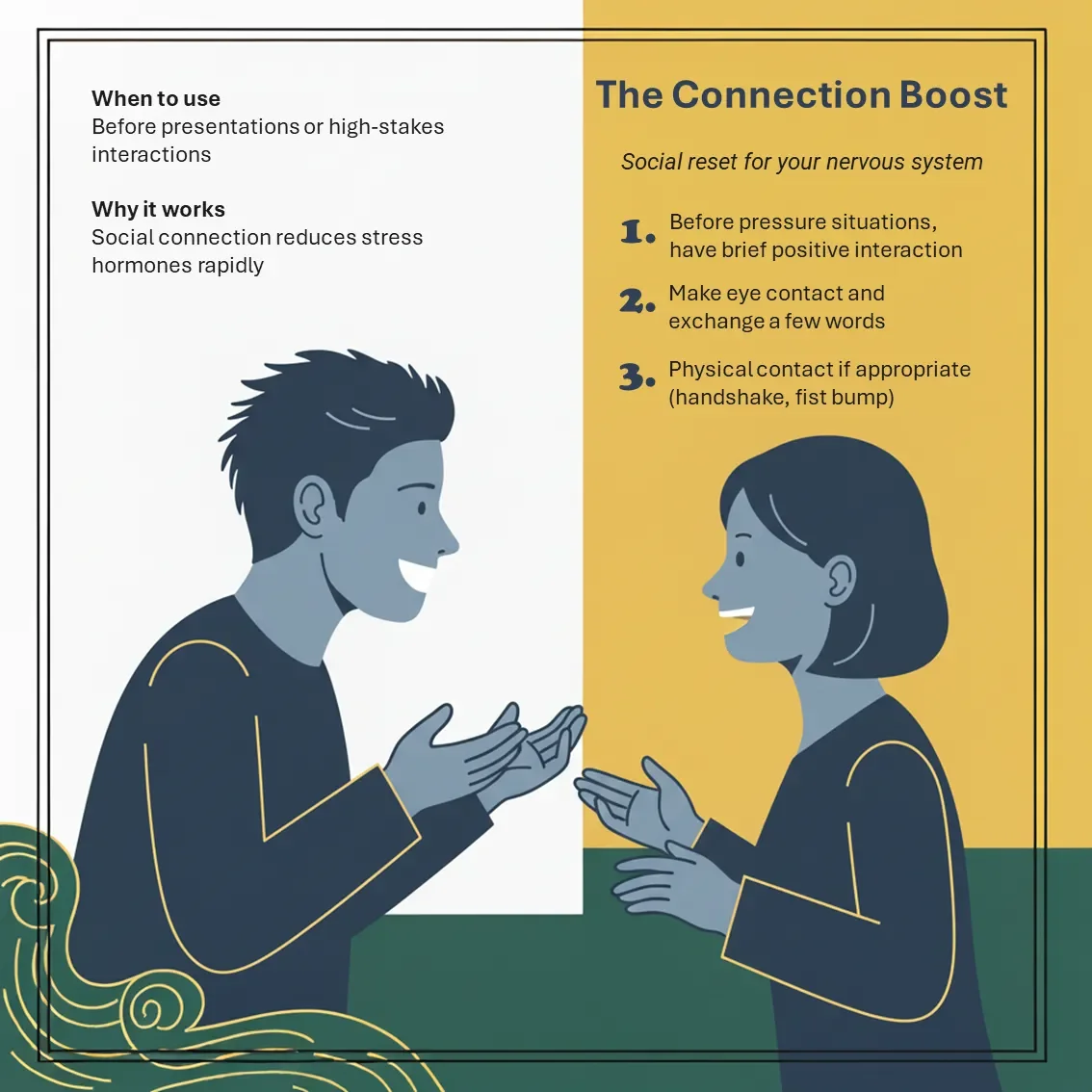
Connection Boost
-
![]()
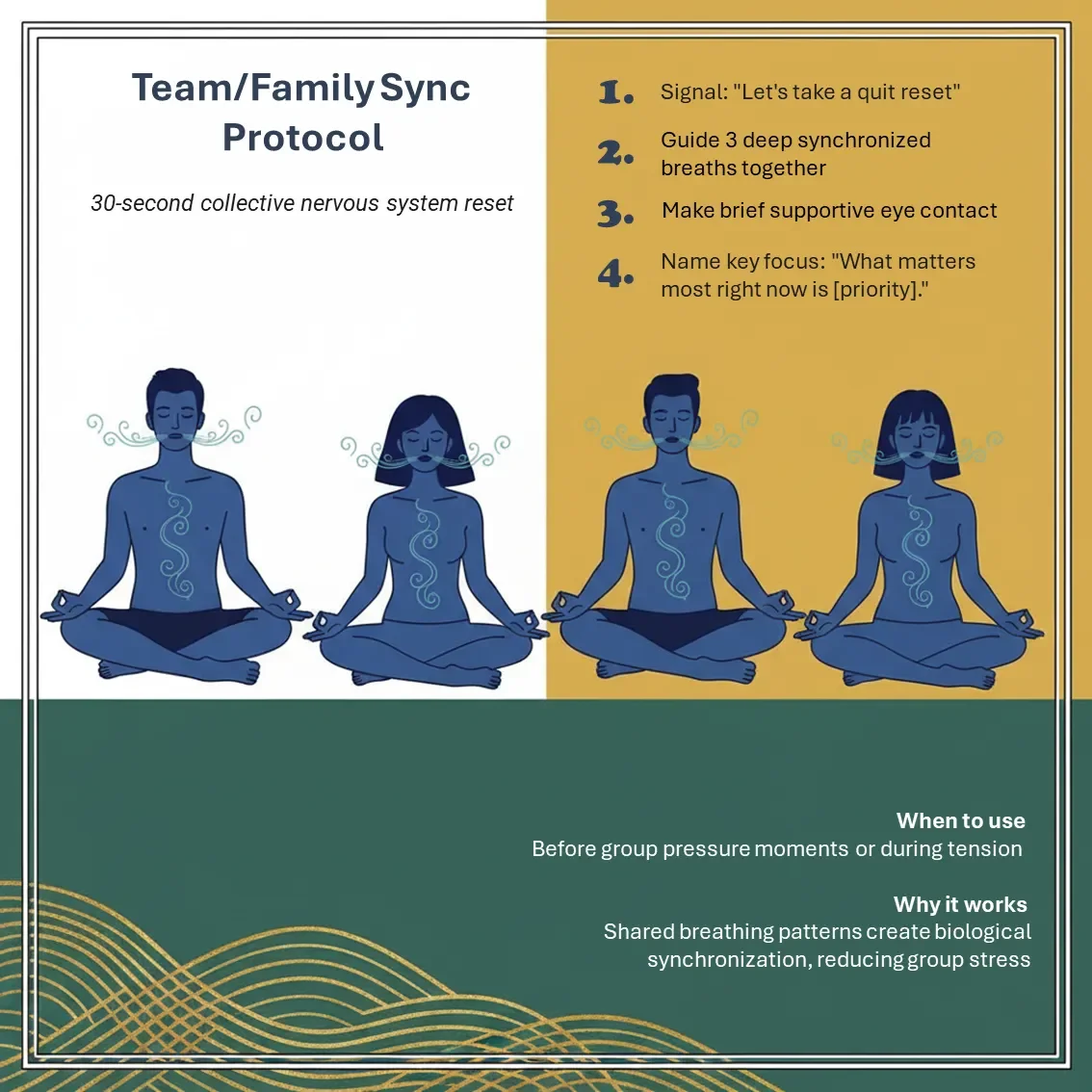
Team/Family Sync Protocol
-
![]()
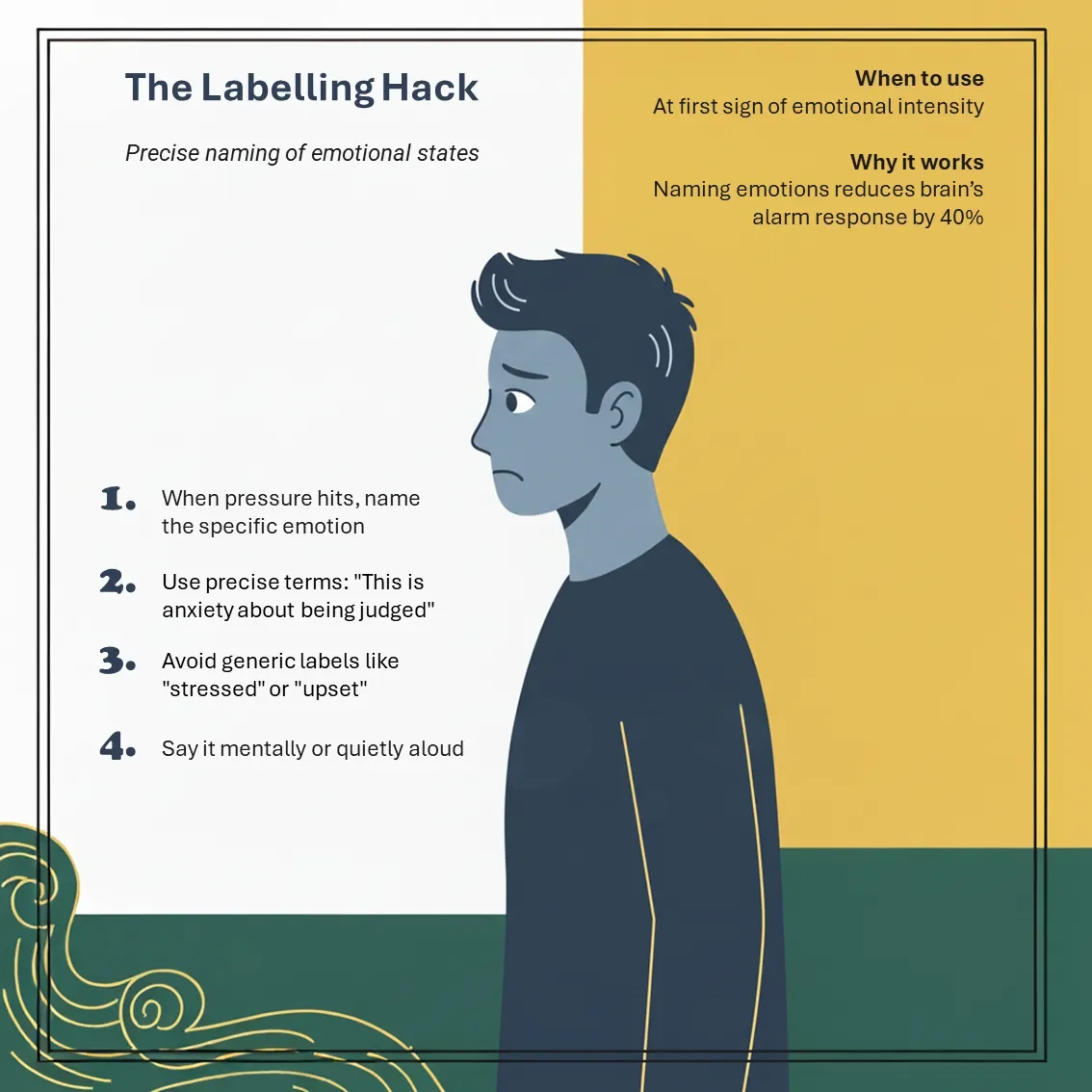
Labelling Hack
-
![]()
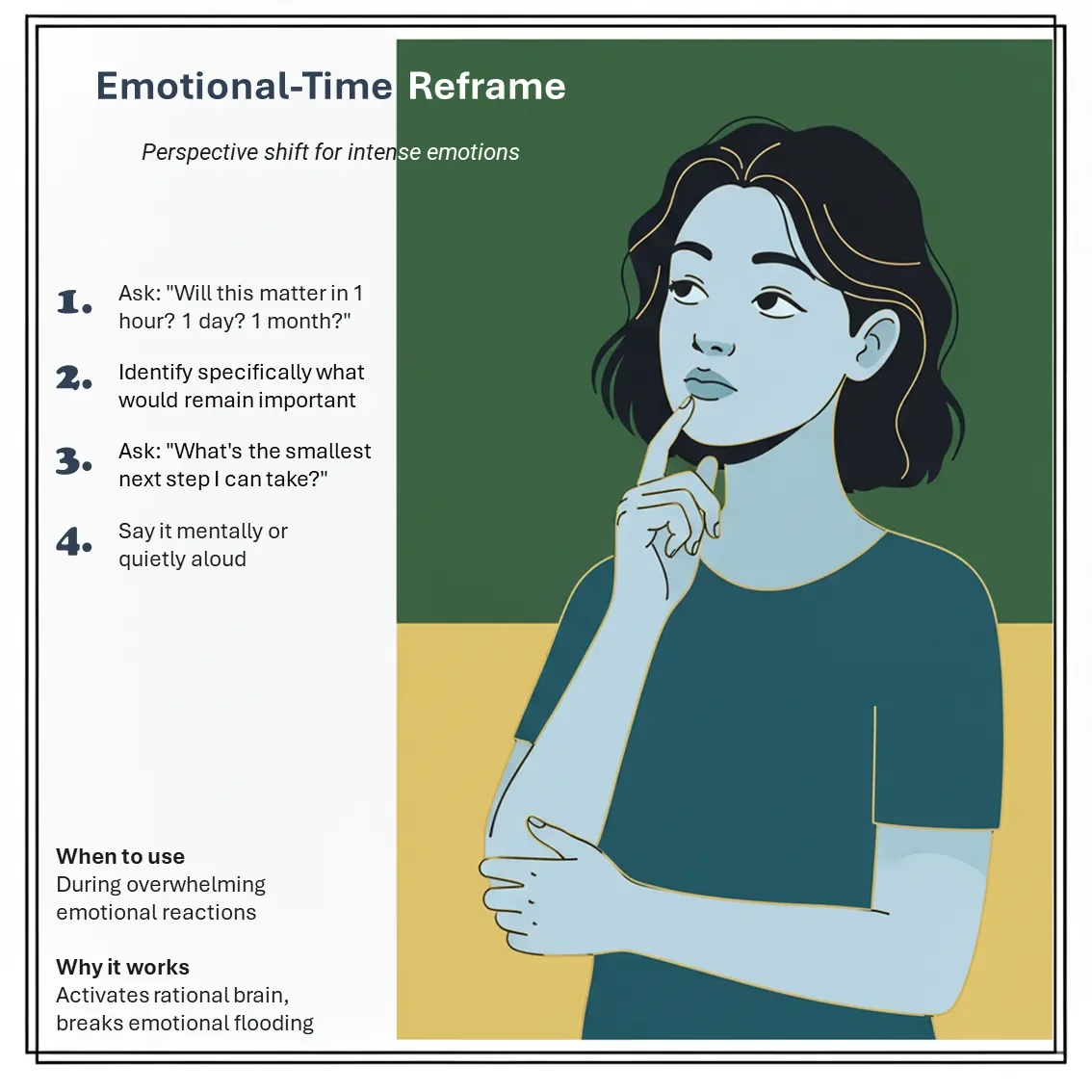
Emotional-Time Reframe
-
![]()
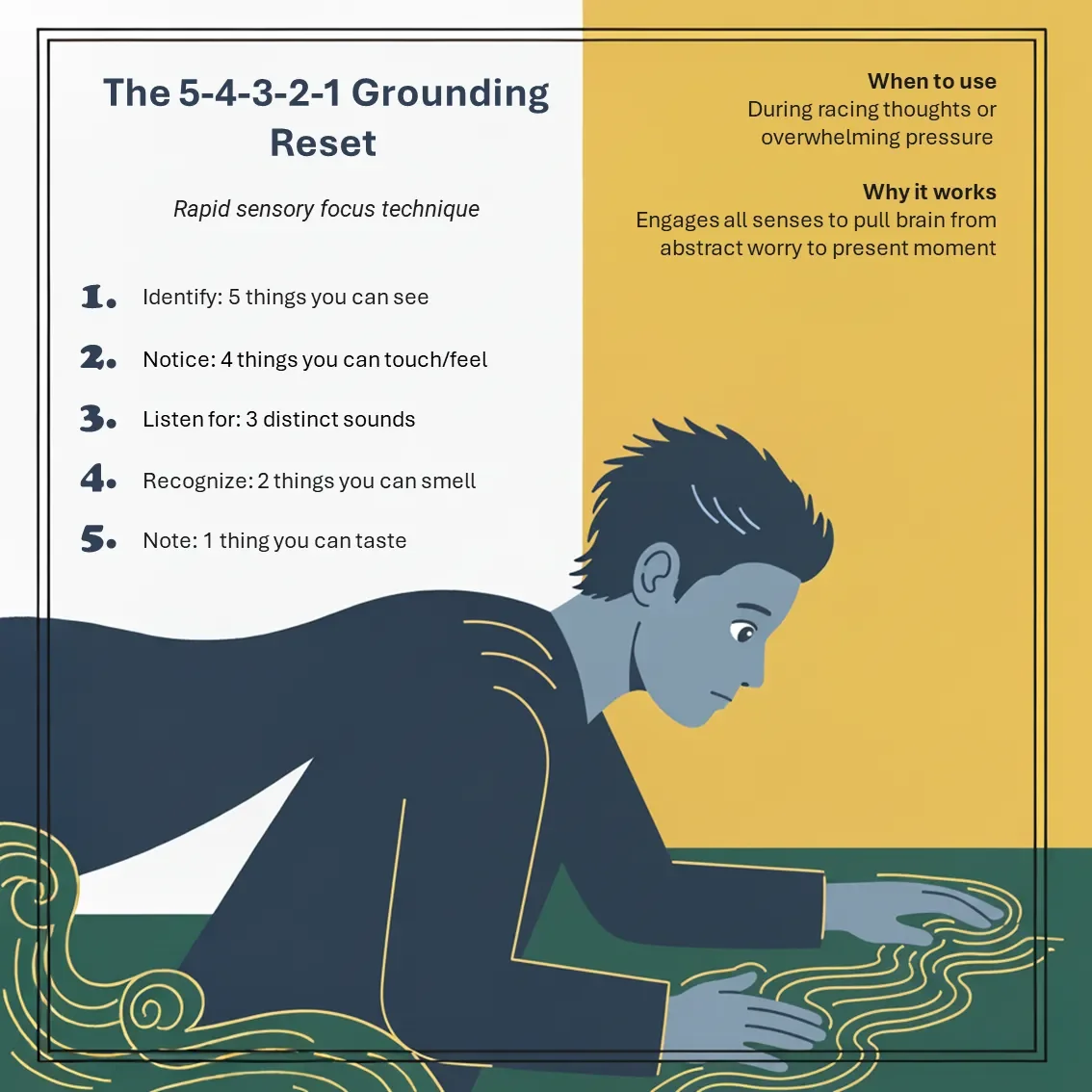
5-4-3-2-1 Grounding Reset
-
![]()
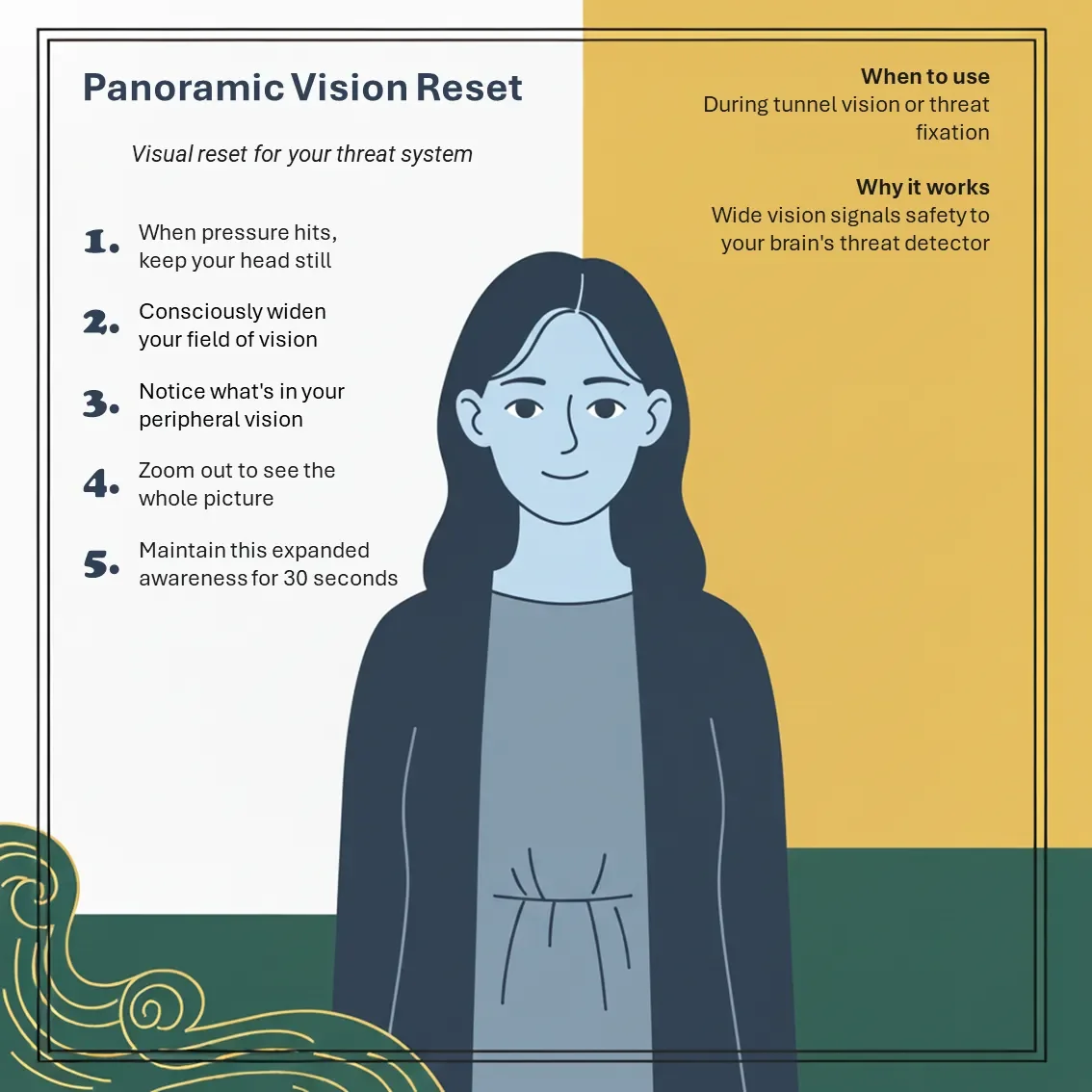
Panoramic Vision Reset
-
![]()
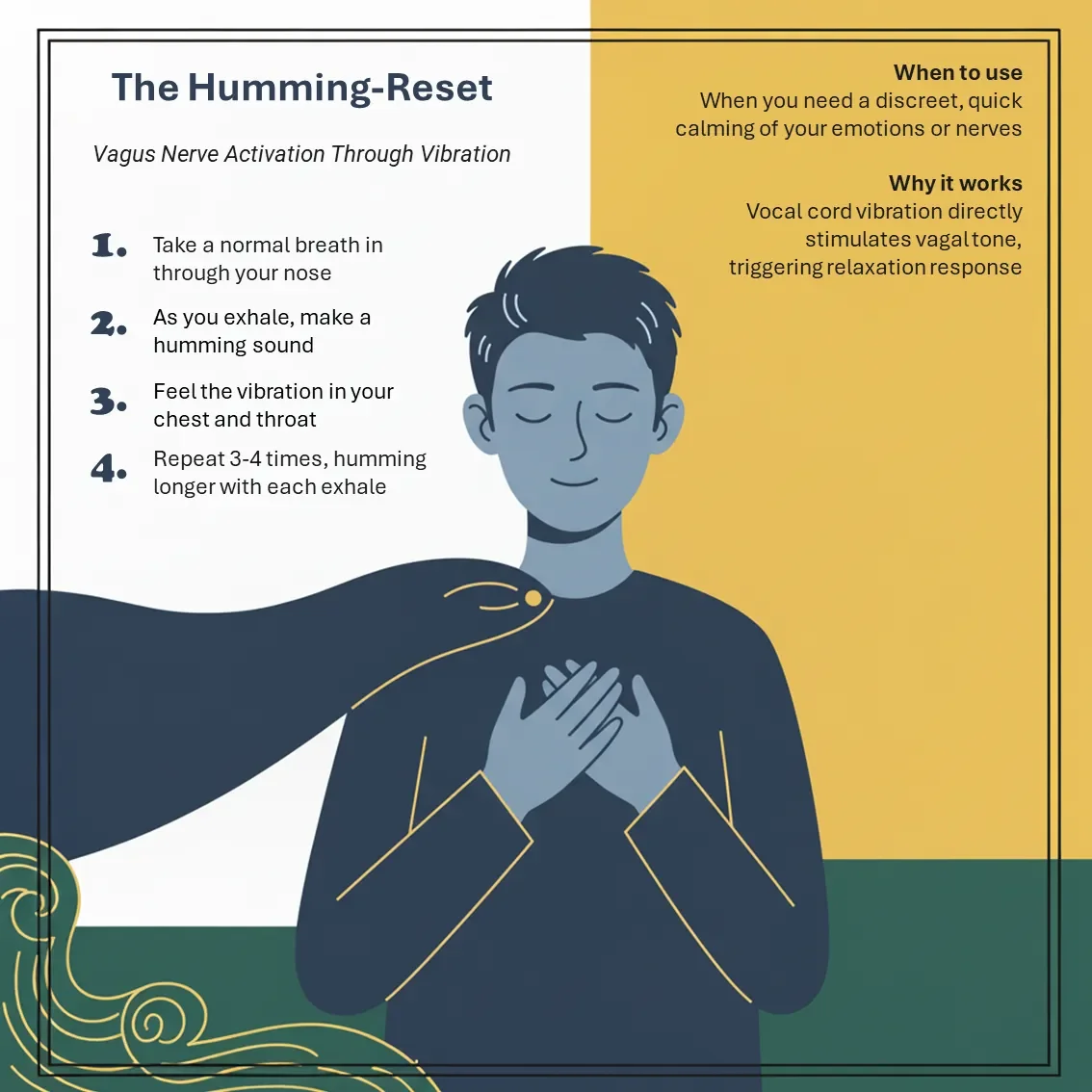
Humming-Reset
BACK: Lead With Courage
& Purpose
Take the next step and discover why purpose is build - not found.
NEXT: Close Your Self-Awareness Gap
Why Smart People Struggle With Feedback (And How to Fix It)