


Protect Your Time
& Energy

-
Most productivity advice focuses on squeezing more into your schedule and not leveraging how human energy works. The problem isn't just about shortage of time; it's a mismanagement of attention and energy.
Research reveals that high performers don't work more hours, but work differently. They've developed sophisticated systems to direct their finite cognitive resources toward what matters most while protecting against energy drains.
Strategic energy management creates a profound shift: from feeling constantly depleted by endless demands to feeling directed and energized by deliberate choices. The result isn't just greater productivity but deeper satisfaction and sustainable performance.
-
Your energy determines your impact. Studies show that working in a state of depleted energy reduces cognitive capacity by up to 40%.
Attention, not time, is the true limited resource. Research reveals that each interruption costs an average of 23 minutes of recovery time, creating a massive hidden tax on your productivity.
Energy debt compounds silently. Like financial debt, energy debt accumulates interest - creating a downward spiral where we start each day with less capacity than the day before.
Energy optimization creates compound returns. Small improvements in how you allocate attention and energy create exponential gains over time.
Studies show that those who master energy management can accomplish in focused hours what takes others full days or weeks. -
You've come to the right place if you recognize yourself in these statements:
The Reactive Responder: Your day is consumed by responding to others' priorities while your most important work consistently gets pushed to "someday."
The Perpetual Multitasker: You're constantly switching between tasks, feeling busy but ending days wondering what you actually accomplished.
The Digital Hostage: Your attention is fragmented by endless notifications, messages, and the nagging urge to check devices.
The Boundary-Challenged: You struggle to say no or set limits, leaving you overcommitted and spread too thin.
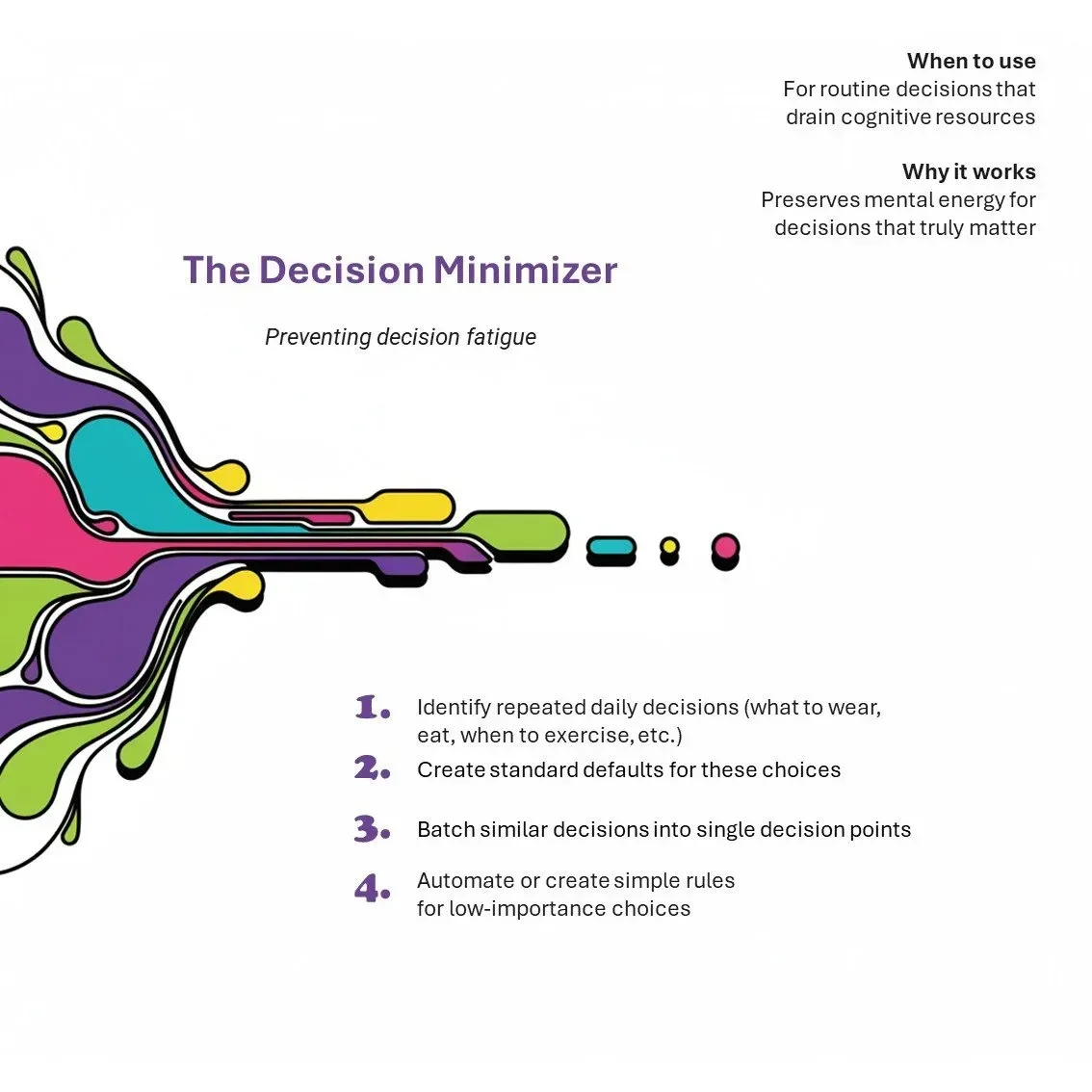
The Depleted Decider: By day's end, even simple decisions feel overwhelming because your mental energy is completely drained.
This approach bridges the gap between knowing you should protect your time and energy and actually having the systems to do it- at home and at work.
-
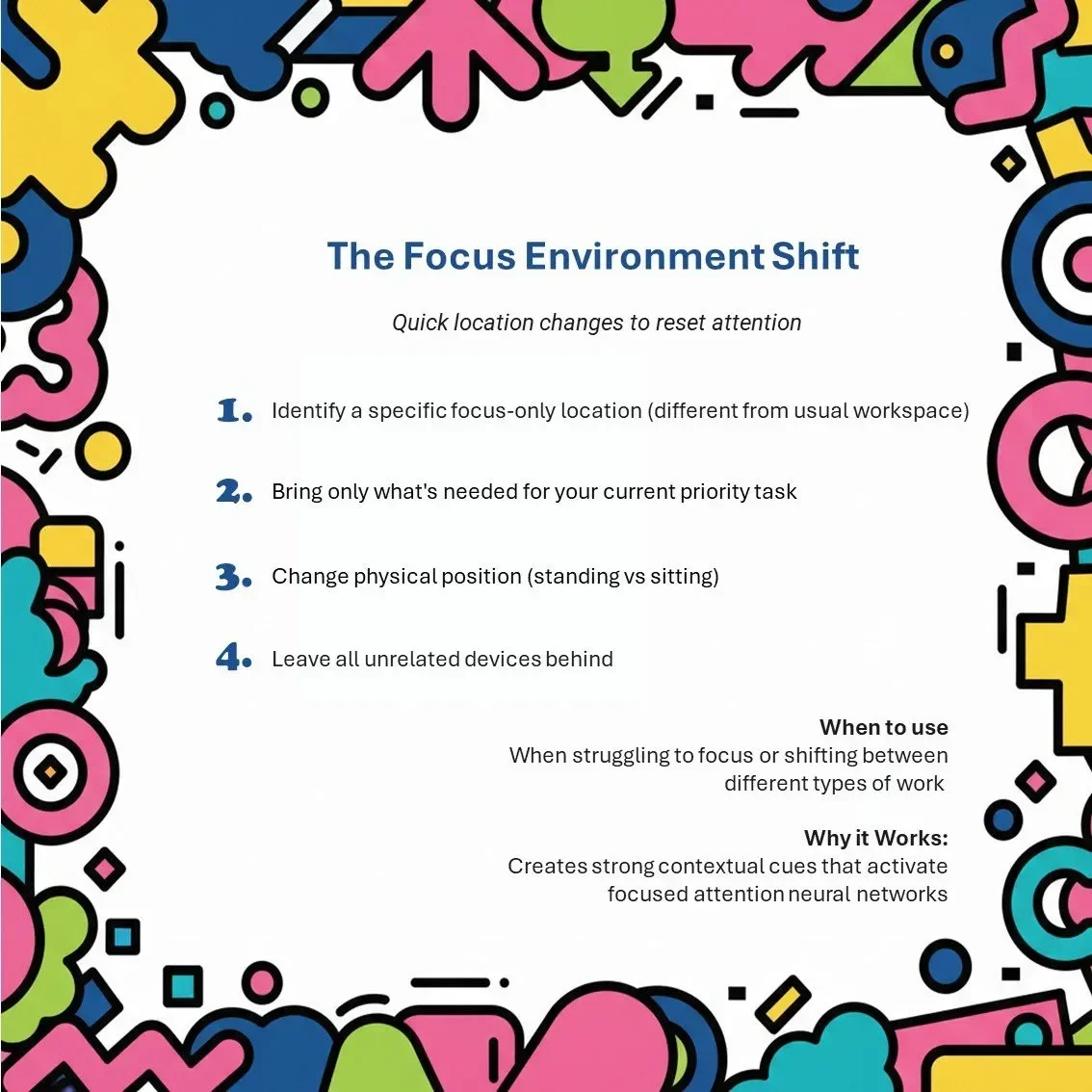
Focus Architecture: Design your environment and schedule around attention management rather than time management, using cognitive science.
Energy-Based Decision Making: Evaluate commitments based on energy return rather than just time required, ensuring your limited resources go to what truly matters.
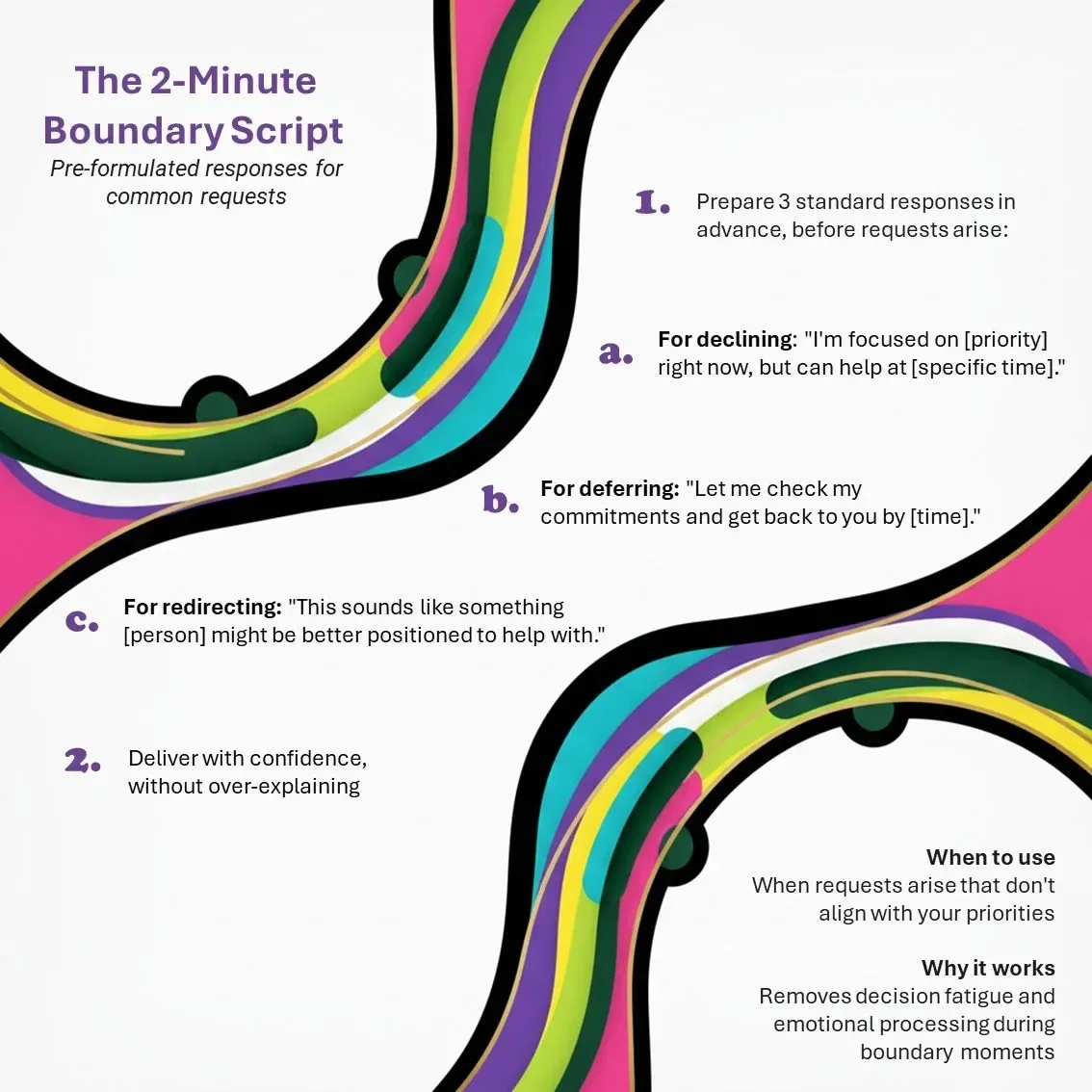
Boundary Construction: Develop scripts and systems to protect your energy without damaging relationships or opportunities.
Digital Preservation: Create practical protocols to prevent technology from fragmenting your attention and draining your cognitive reserves.
Strategic Recovery: Implement science-backed approaches to renew energy between intense work periods, maintaining sustainable high performance.
These tools transform how you experience your days: from constantly depleted by endless demands to energized by conscious choices about where your attention goes.
The Attention Economy
Why Your Focus Amplifies Your Time
Time management is not enough. Research shows each interruption costs 23 minutes of recovery time, and high performers combine smart scheduling with superior attention protection systems. Their secret isn't working more hours but extracting more value from each hour through focused attention. Properly managed attention can triple your productive output from the same number of hours.
The Focus Architecture exercise helps you create a personalized system that optimizes both dimensions: strategic time allocation paired with attention protection. You'll learn to structure your environment to maximize your cognitive resources.
Invest Wisely: The Energy ROI Matrix
The Missing Half of the Productivity Equation
Time management only solves half the equation. Performance science shows: how you invest your energy is equally crucial - yet far more overlooked.
Research shows we must consider both dimensions: the time activities require AND their impact on our energy. Some high-value work energizes you despite being challenging, while seemingly quick tasks can create an invisible energy deficit that diminishes everything that follows.
This exercise helps you map your activities based on their value and energy impact. You will discover your personal energy patterns and create an optimal allocation strategy that maximizes both productivity and sustainability.
From Depletion to Direction:
The Power of “I Will” Boundaries
Research shows that true boundaries lead to greater impact, less burnout, and healthier relationships than constantly saying "yes." Yet most boundary attempts fail because they depend on others changing their behavior.
The game-changing insight: True boundaries aren't about controlling others but about managing ourselves. This shift gives us back the control. When we transform "they should" expectations into "I will" commitments.
This exercise helps you convert vague frustrations into concrete plans focused entirely on what you can control: your own responses. You'll build a protection system for your time, focus, and energy that strengthens rather than damages your relationships.
Because the most powerful boundaries don't require others to do anything differently, they simply require you to respond differently.


Reclaim Your Brain: The Digital Reset
The average person is interrupted by digital technology every 40 seconds and checks their phone 96 times daily. This isn't normal - it's by design.
Digital distraction isn't a willpower problem. Neuroscientific research reveals: attention control is primarily environmental, not mental. People who maintain focus in the digital age don't have stronger willpower, they've simply redesigned their digital landscape to work with their brain rather than against it.
This exercise gives you the three most powerful environmental interventions for reclaiming your attention from digital disruption. You'll learn to create systems that protect your cognitive resources while maintaining the benefits of technology - because in an attention economy, your focus is literally your most valuable asset.

The 30% Performance Edge: Why Rest Is as Strategic as Work
The Strategic Recovery Blueprint
Ever notice how your mental sharpness and energy fluctuate predictably throughout the day? This isn't random… it's biology at work.
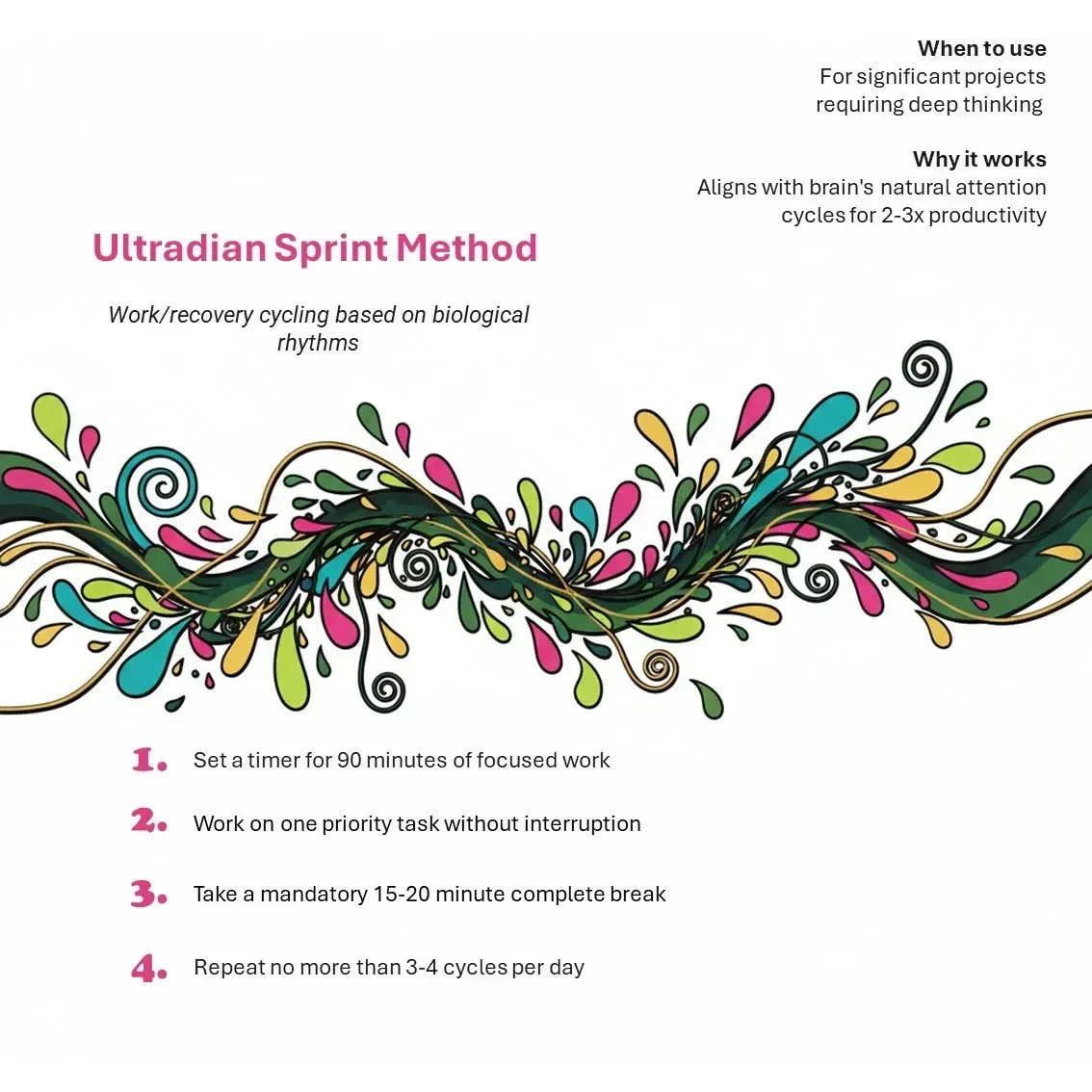
Research reveals that when we align tasks with our natural biological rhythms and build strategic recovery into our schedule, we achieve up to 30% greater output with less effort. Yet most of us focus solely on work periods, ignoring the recovery patterns that determine our performance capacity. And often we even misjudge what will work for us. Studies show that people who initially resist biological alignment ("I don't need breaks") experience the most dramatic improvements when they actually implement strategic recovery.
This exercise helps youto create a schedule that incorporates both peak performance periods and optimized recovery - making life feel easier while improving results at home and at work.
Time and Energy Saving Hacks
-
![]()
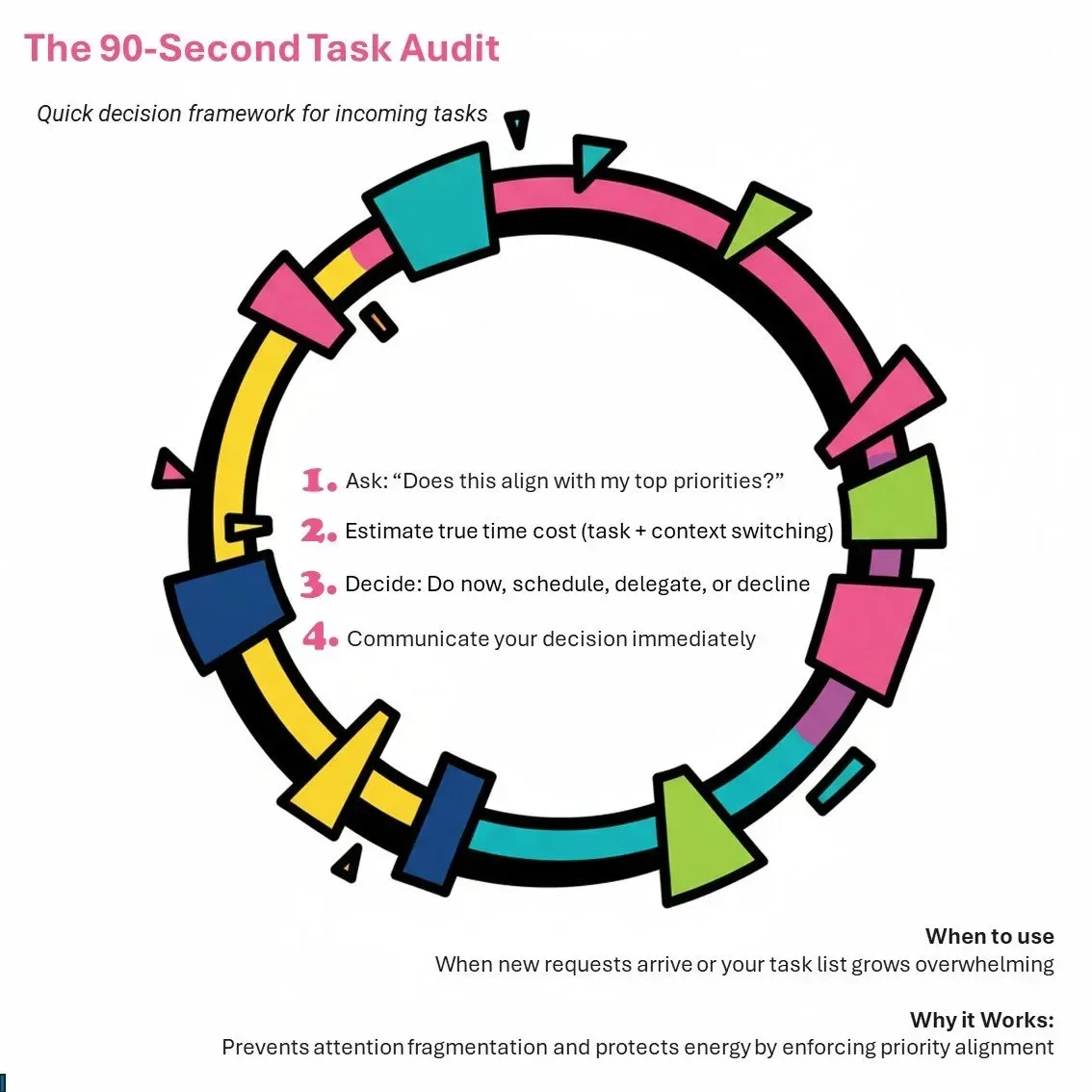
90 Second Task Audit
-
![]()
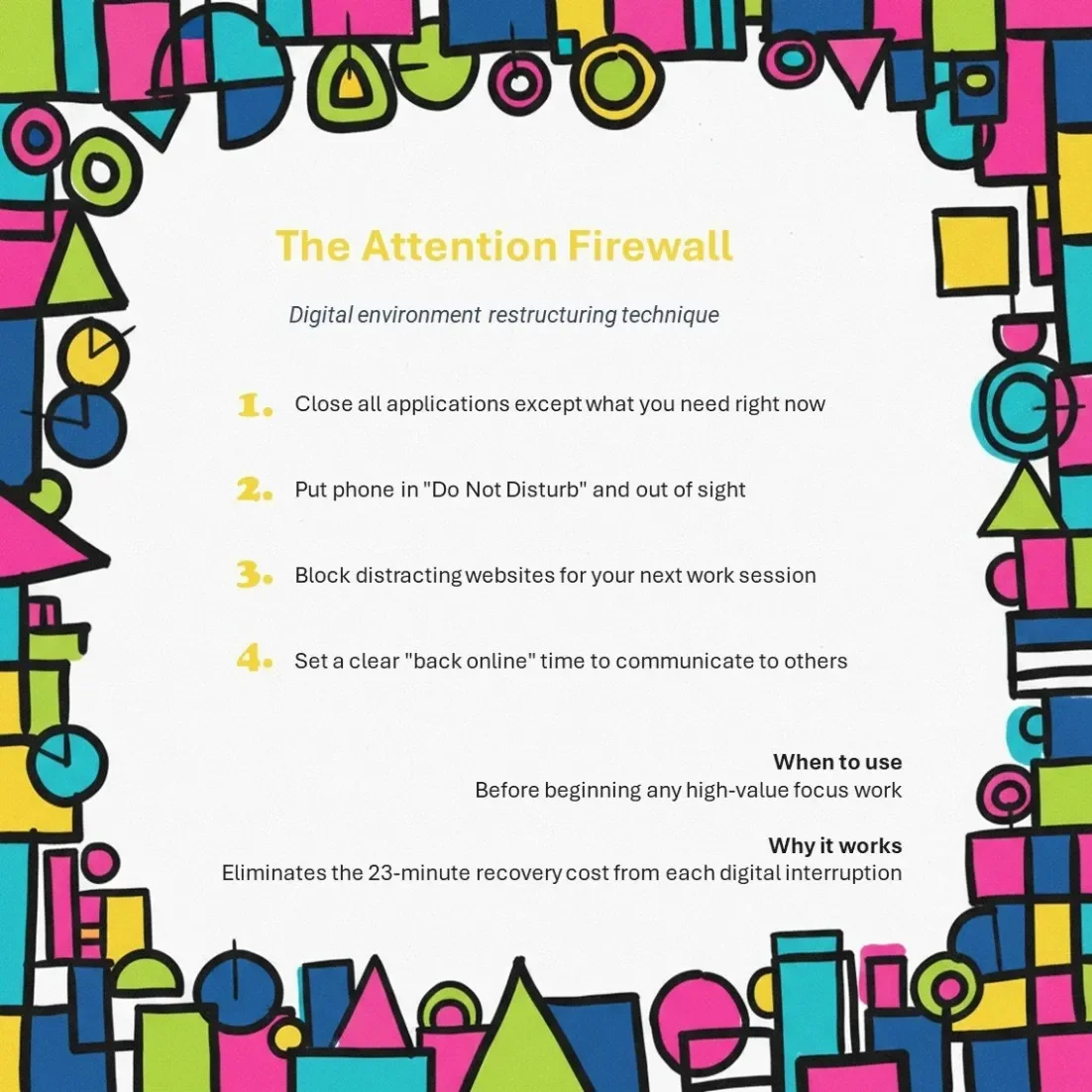
Attention Firewall
-
![]()
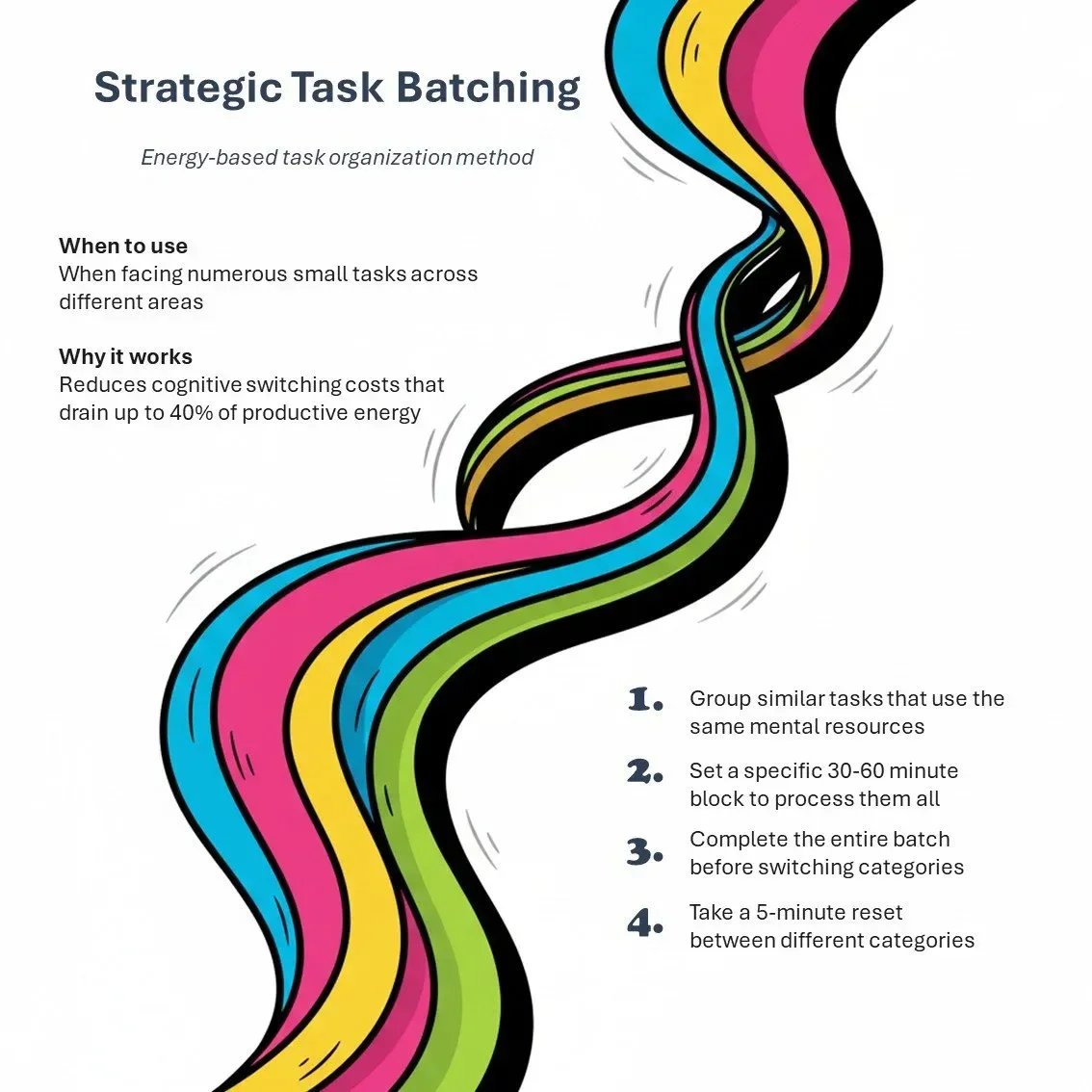
Strategic Task Batching
-
![]()
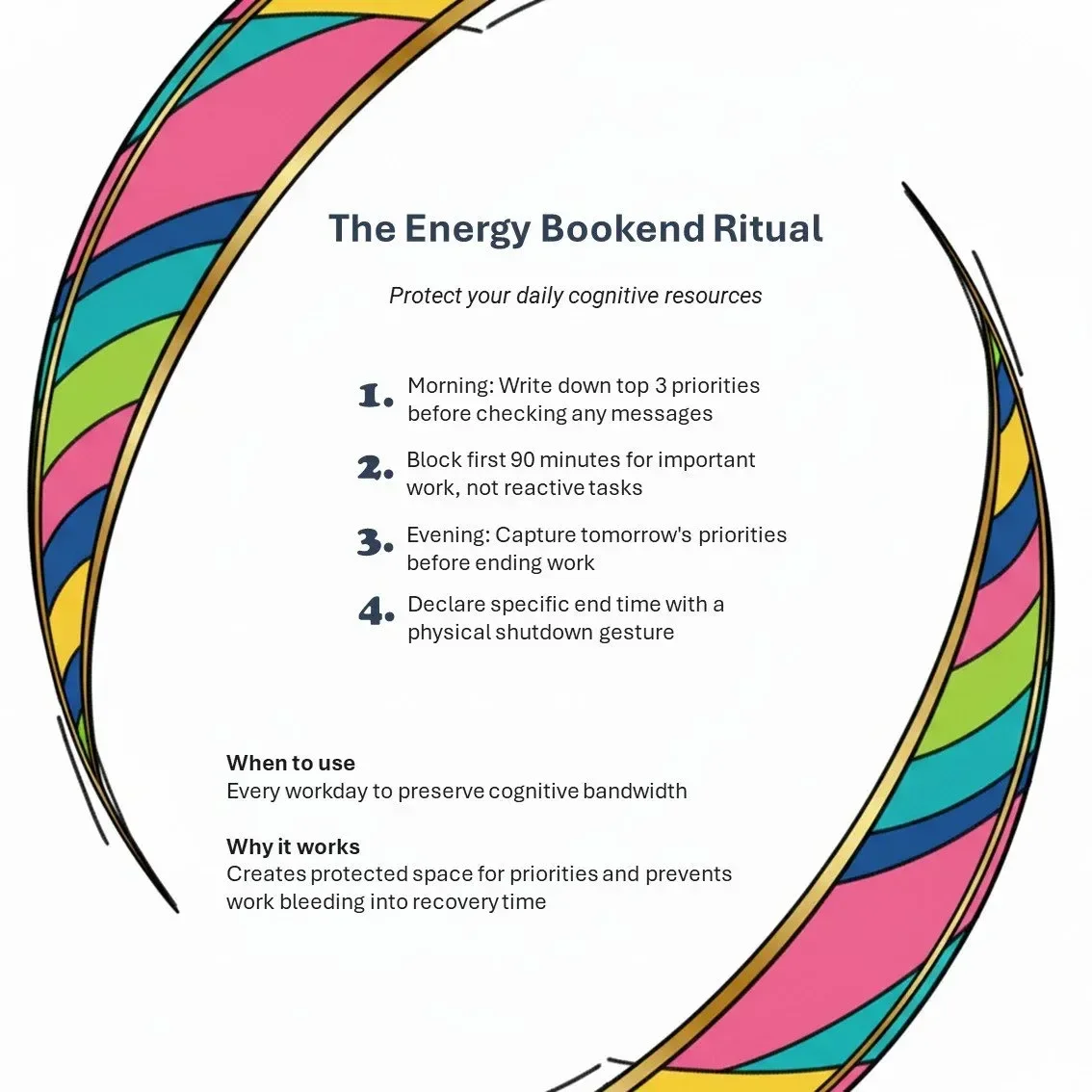
Energy Bookend Ritual
-
![]()
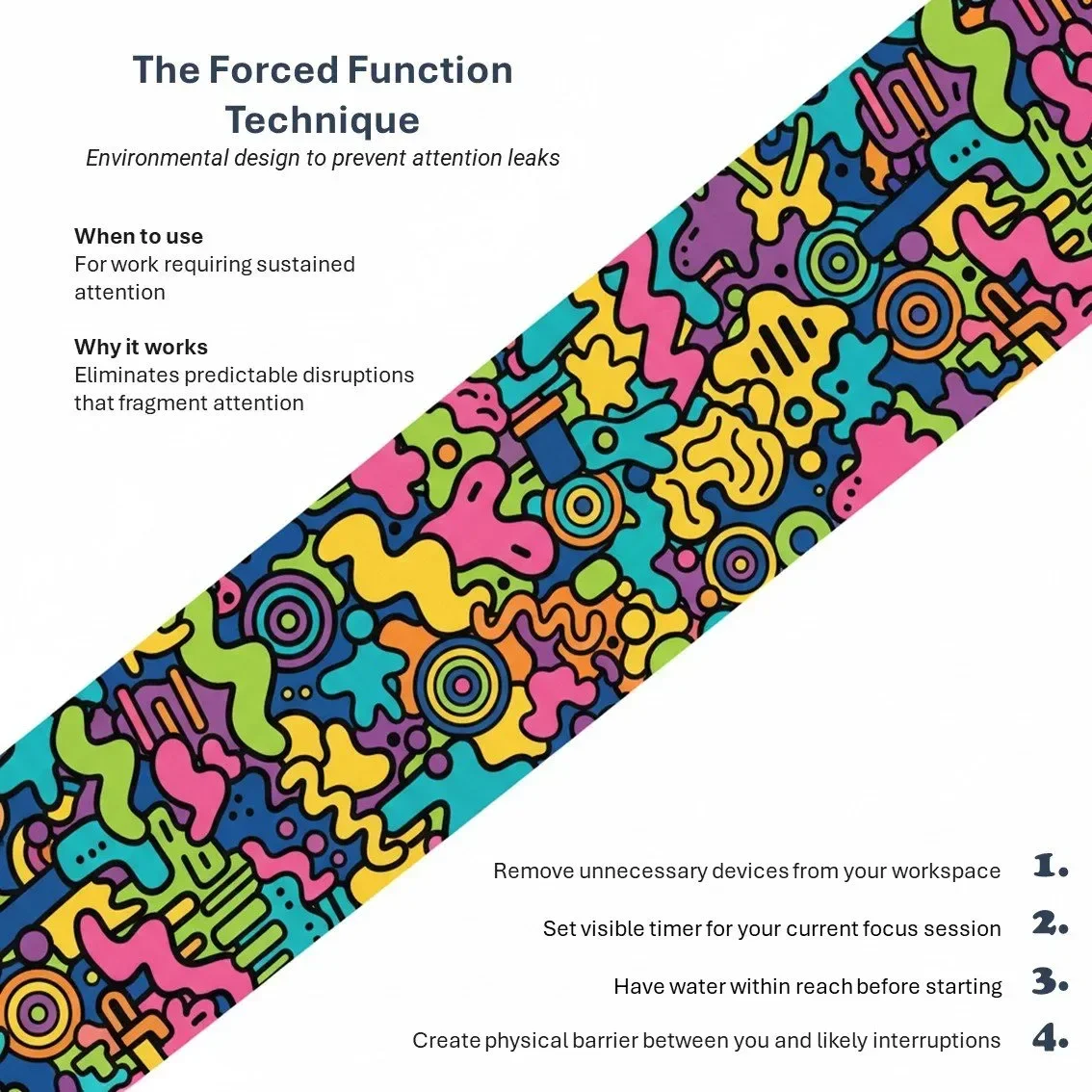
Forced Function Technique
-
![Infographic titled 'The 2-Minute Boundary Script' with colorful abstract border designs. It explains preparing three standard responses for declining, deferring, or redirecting requests, and offers tips on delivering responses with confidence when requests do not align with priorities.]()
2 Minute Boundary Script
-
![]()
Ultradian Sprint Method
-
![infographic titled "The Decision Minizer" with colorful abstract design on the left. Outlines four steps for preventing decision fatigue: 1. Identify repeated daily decisions, 2. Create standard defaults, 3. Batch similar decisions, 4. Automate or create simple rules.]()
Decision Minimizer
-
![]()
Focus Environment Shift
-
![Colorful tangled lines with text about the Energy Audit Check-In, including instructions on when to use it and why it works, and four steps for energy management.]()
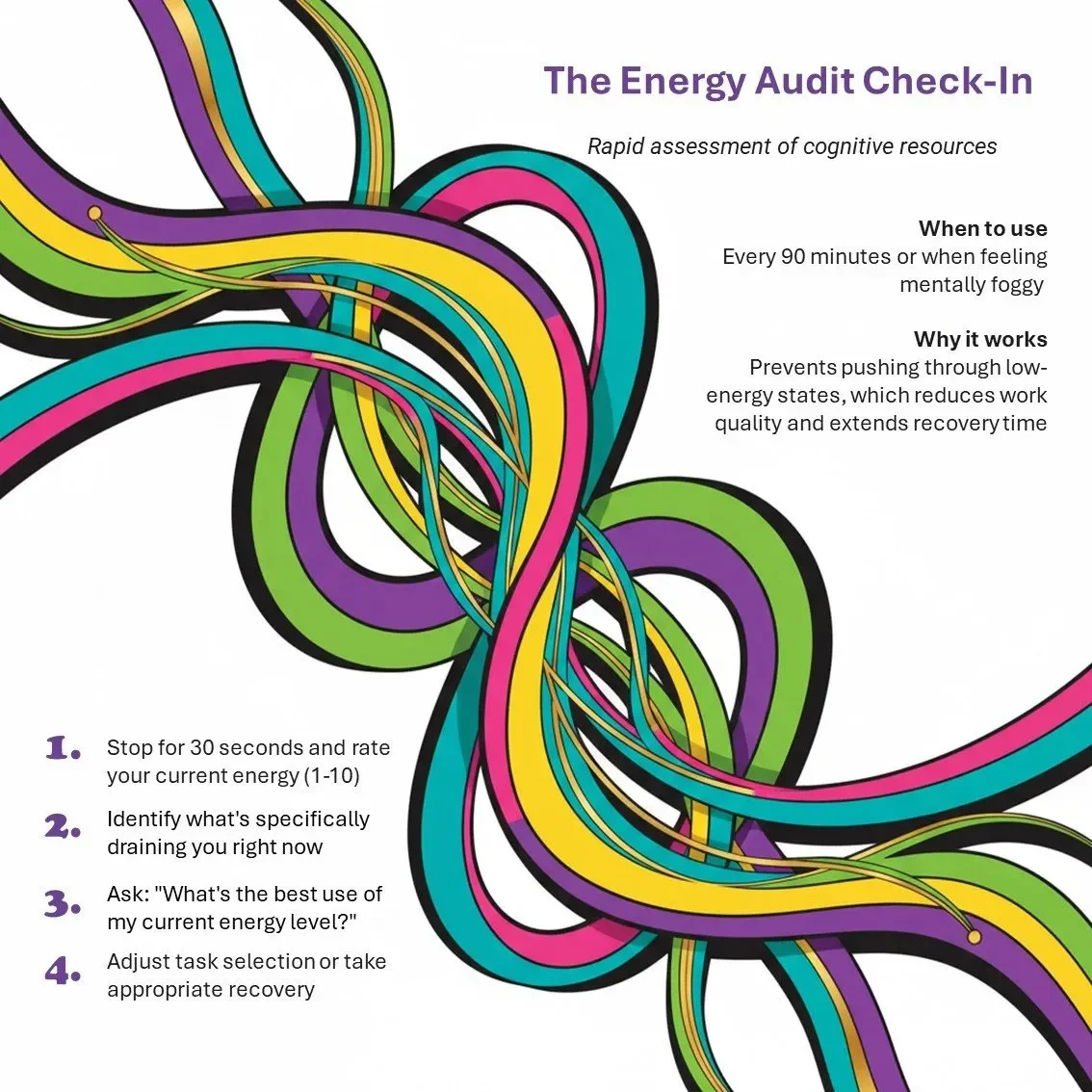
Energy Audit Check-In
NEXT: Build Habits
That Stick
Discover why willpower is overrated and what habits have to do with hitchhiking.

BACK: Close Your Self-Awareness Gap
Why Smart People Struggle With Feedback (And How to Fix It)