

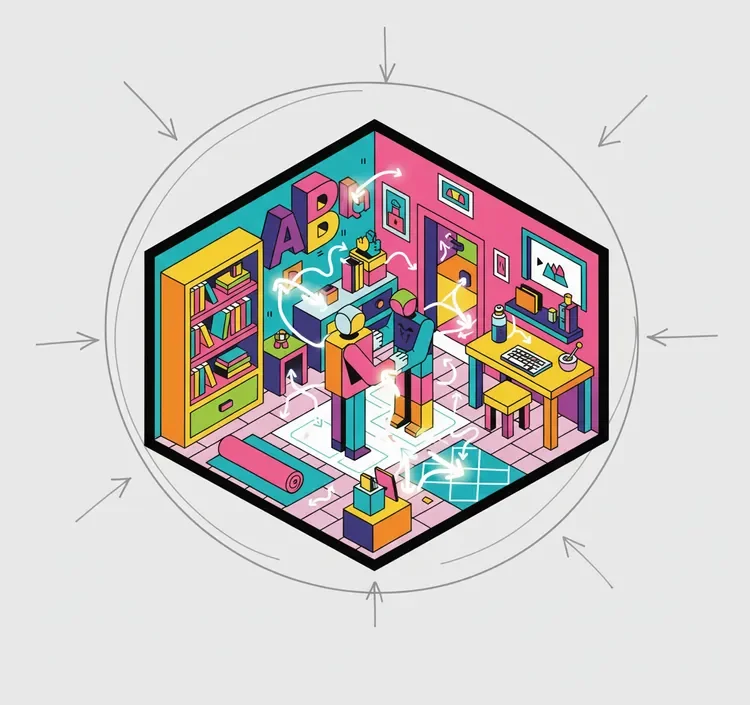
Shape the Environment
Root Change by Designing Supportive Space
Change sticks when the world around us supports it. "Shape the Environment" is about designing spaces, systems, and cues that make new behaviors the default choice, embedding growth into the very fabric of daily life. Let’s focuses on rooting change by crafting surroundings that naturally guide action.
Shaping the environment means crafting spaces and systems with science-backed methods to make desired behaviors automatic Here’s how:
Scan the Environment Scan to assess their current spaces, routines, and systems, spotting friction points or missed opportunities for support. Ask, “What in their world makes this behavior hard or easy?”
Design the Default: Create supportive setups where the right action is the easiest choice by organizing spaces, simplifying systems, and reducing mental fatigue with calming, focused settings.
Reinforce: Add tailored cues tied to routines and subtle social elements in spaces to ensure behavior sticks through repetition and a sense of connection over time.
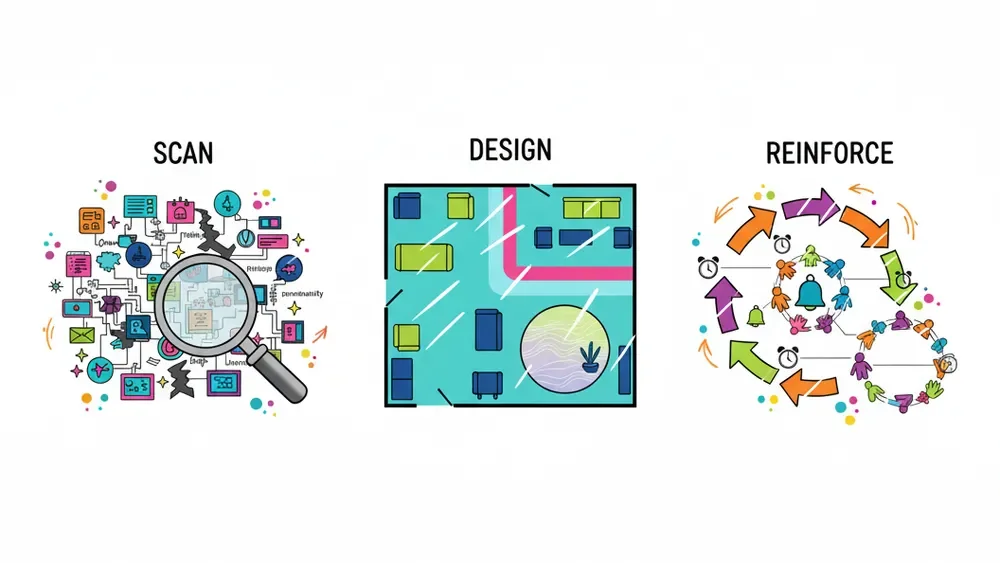
Quick Start Guide – Scan, Design, Reinforce

For Leaders
Common Problem: “My team struggles to maintain new workflows, often reverting to old habits”
Scan the Environment: Ask or observe, “What in your workspace or routine blocks this workflow?” identifying barriers like scattered tools or no clear task start cues.
Design the Default by setting up a shared digital dashboard as the default for updates, pre-configured for ease, and creating a quiet, plant-filled “focus corner” in the office to reduce mental fatigue.
Reinforce by adding a calendar alert, “Check dashboard at 10 AM,” tied to their morning routine, and placing a team mission poster near the corner for a sense of belonging. This evokes ease by making the workflow the natural choice.
Micro-Challenge: Conduct a quick Environment Scan for a team member today (e.g., check their workspace for barriers), design one default tweak (e.g., pre-set a tool), and reinforce with a routine-tied cue (e.g., time-based reminder) and a social element (e.g., team photo) to root the behavior.
Shape The Environment In Action
Here are practical ways to apply this tool across relationships and goals.
Try a micro-challenge today to make growth automatic with environmental design techniques.
For Parents
Common Problem: “My child struggles to stick with routines like bedtime or homework.”
Scan the Environment: Ask or observe, “What in their space or day blocks this routine?” spotting barriers like toys near the study area or no bedtime wind-down signal.
Design the Default by setting up a homework-only desk as the default study spot, cleared of distractions, with a cozy, calming lamp to restore focus, and pre-placing pajamas on the bed as a bedtime default.
Reinforce by adding a visual timer at the desk, “Start homework at 4 PM,” tied to after-school time, and a family “calm corner” sign near the bed for connection. This evokes ease by making routines automatic.
Micro-Challenge: Run a quick Environment Scan for a child’s routine today (e.g., check their space for distractions), design one default tweak (e.g., pre-set study spot), and reinforce with a routine-tied cue (e.g., visual timer) and a social element (e.g., family sign) to root the behavior.
Ideas to Inspire Shape the Environment
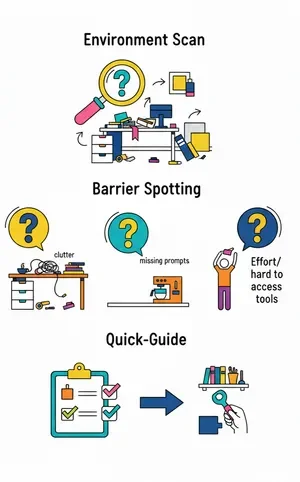
Environment Scan Quick-Guide for Barrier Spotting: Use a short list of 3-5 questions during your Scan step to assess spaces or routines, focus on clutter, cues, or effort.
Example: For a team, ask, “Is your desk cluttered? Missing prompts? Hard to access tools?” or for a child, “Is their space distracting? Unclear start? Too far from tools?” to spot barriers.
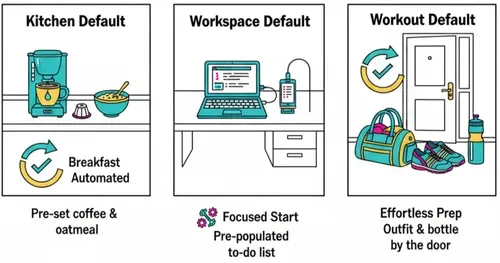
Default Setup Hacks for Instant Design: During the Design step, pre-set one key element in their space or system as the default to cut choice fatigue, using optimization science.
Example: For a team member, pre-load a shared app with task templates, “Just click to start,” or for a child, pre-place homework books on their desk, making the right action automatic.
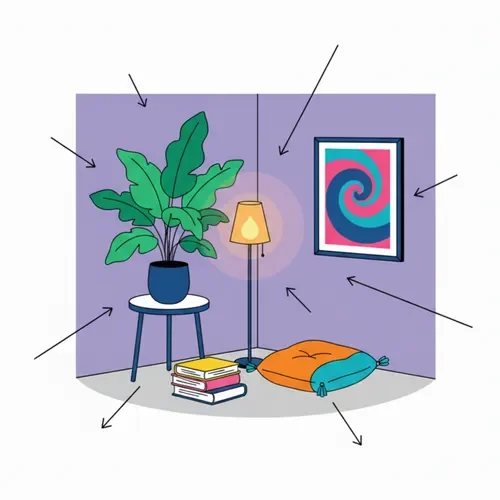
Restorative Space Tweaks for Calm Focus: Add one calming element to their environment (e.g., plant, soft light, decluttered corner) during Design to reduce mental fatigue.
Example: Add a small desk plant for a team member, “This corner’s for focus,” or a cozy lamp in a child’s study spot, “This light helps you think,” restoring energy for tasks.
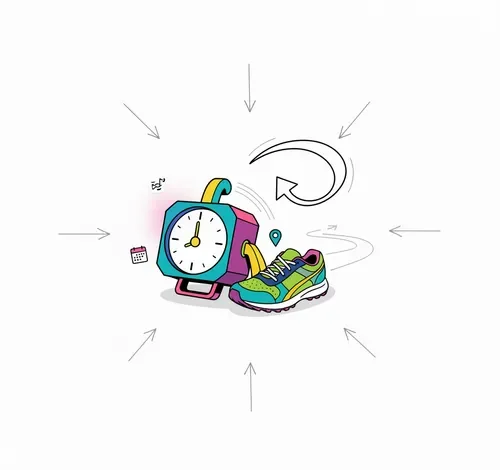
Dynamic Trigger Objects for Routine Reinforcement: Place a time or location-tied object in their space during Reinforce as a dynamic cue to prompt action without thought.
Example: Put a sticky note on a team member’s monitor, “Start task at 9 AM,” or a timer by a child’s snack spot, “Homework at 4 PM,” linking to daily flow.
WHY IT MATTERS
*
WHY IT MATTERS *
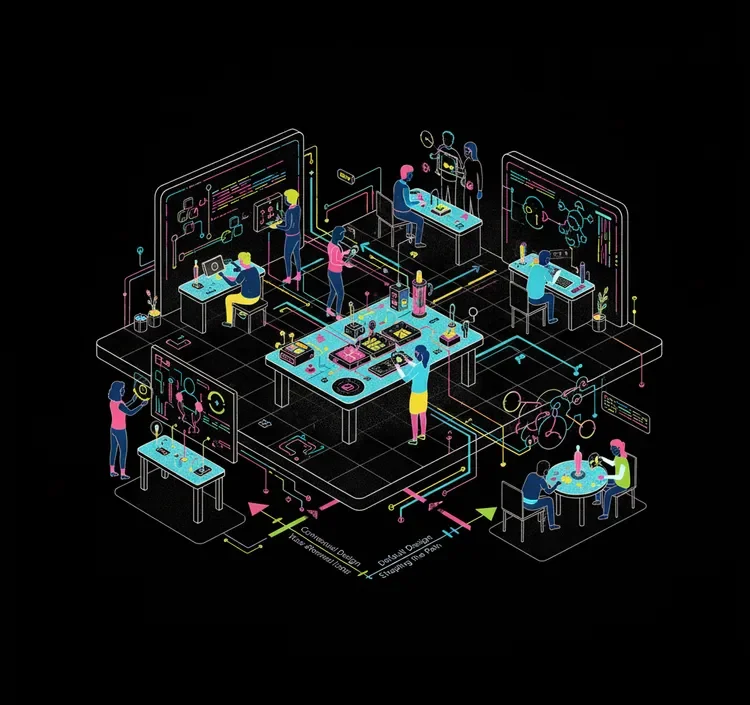
The Science Behind Shape the Environment
Contextual Design Automates Action: Dynamic Environmental Triggers tailored to routines increase habit formation by up to 30%, reducing friction long-term (Journal of Behavioral Decision Making, 2022-2023).
Cue-Reward Loops Hardwire Habits: Environmental cues paired with small rewards strengthen neural pathways in the basal ganglia, automating behaviors via dopamine (Huberman Lab, 2022).
Default Design Drives Compliance: Setting behaviors as defaults (e.g., pre-set systems) boosts adherence by 40-50%, especially with smart, adaptive designs (Thaler, Nudge, 2021-2023).
Restorative Spaces Renew Energy: Calming, clutter-free environments reduce mental fatigue, enhancing focus for new behaviors by 25% (Journal of Environmental Psychology, Kaplan, 2022).
Environmental Social Cues Boost Belonging: Spaces reflecting social ties increase motivation through connection, even without direct interaction (Social Cognitive and Affective Neuroscience, Eisenberger, 2022).
Shaping the Path Evokes Ease: Dan Heath’s Switch (2010) shows environmental tweaks motivate more than willpower. Modern strategies like dynamic cues help the brain predict success over struggle (Barrett on emotion construction, 2017).

NEXT: Make It Social
An often underestimated change management tool to root the change.

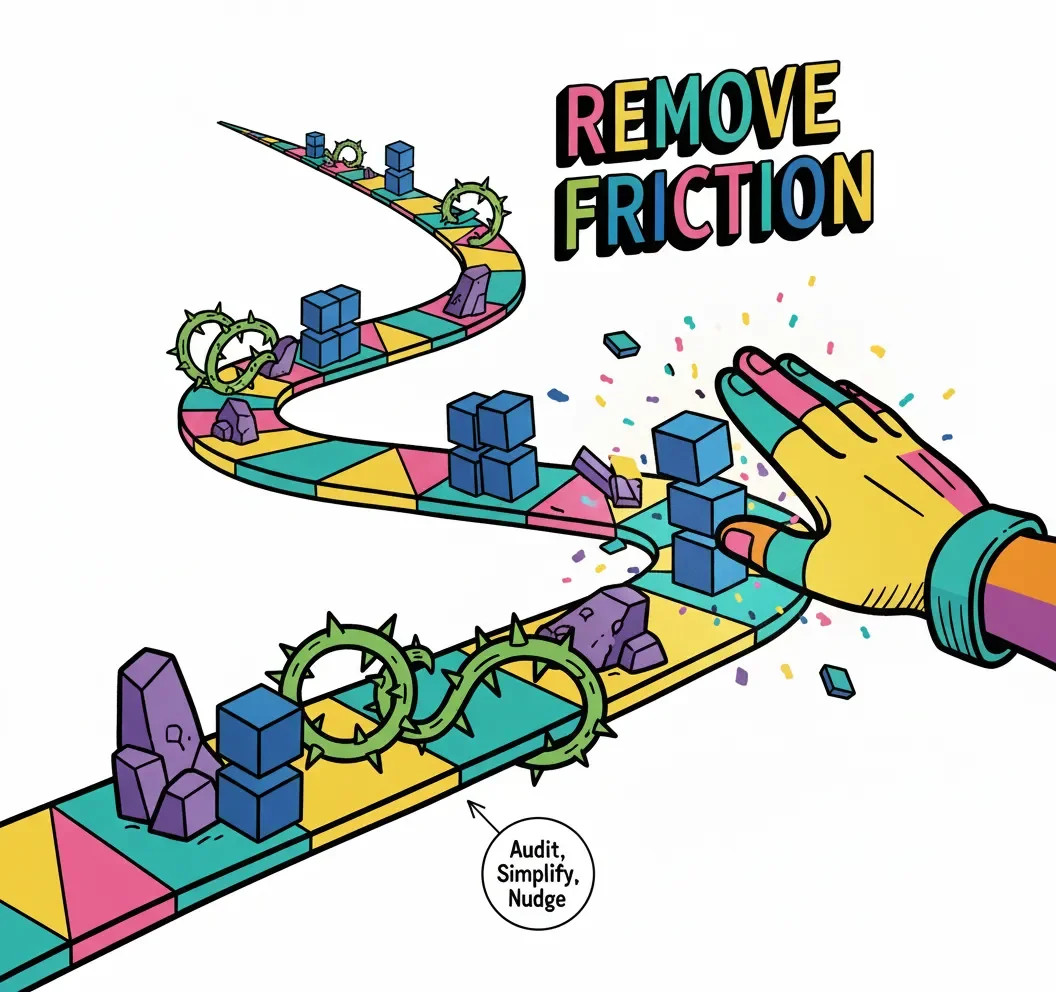
BACK: Remove Friction
Even the strongest motivation falters when obstacles clutter the path.