

Remove Friction
Clearing Barriers with Innovative Strategies
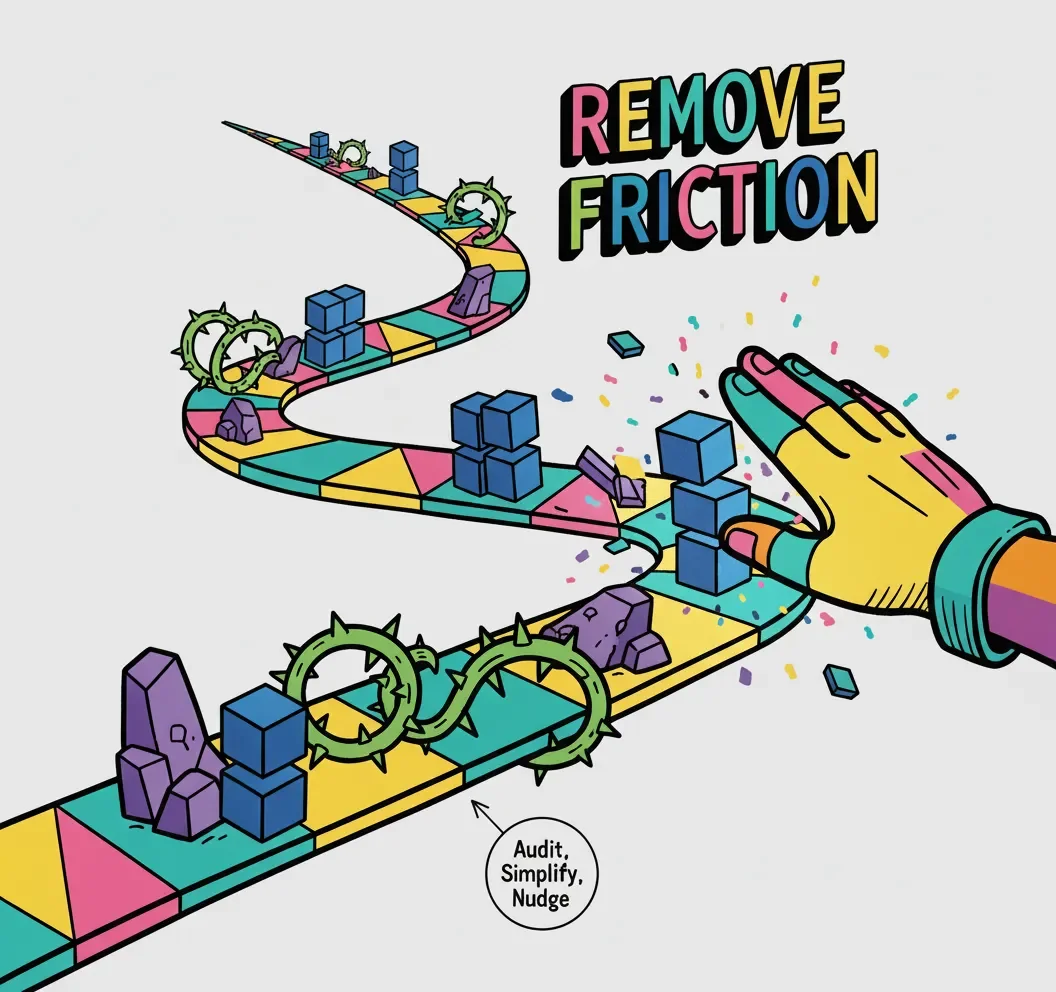
Even the strongest motivation falters when obstacles clutter the path. "Remove Friction" is about identifying and eliminating physical, mental, or emotional barriers, so the right actions feel effortless and relieving. Based on latest research, let’s use the Audit, Simplify, Nudge - Guide to ensure energy stays on progress, not struggle.
Quick Start Guide – Audit, Simplify, Nudge
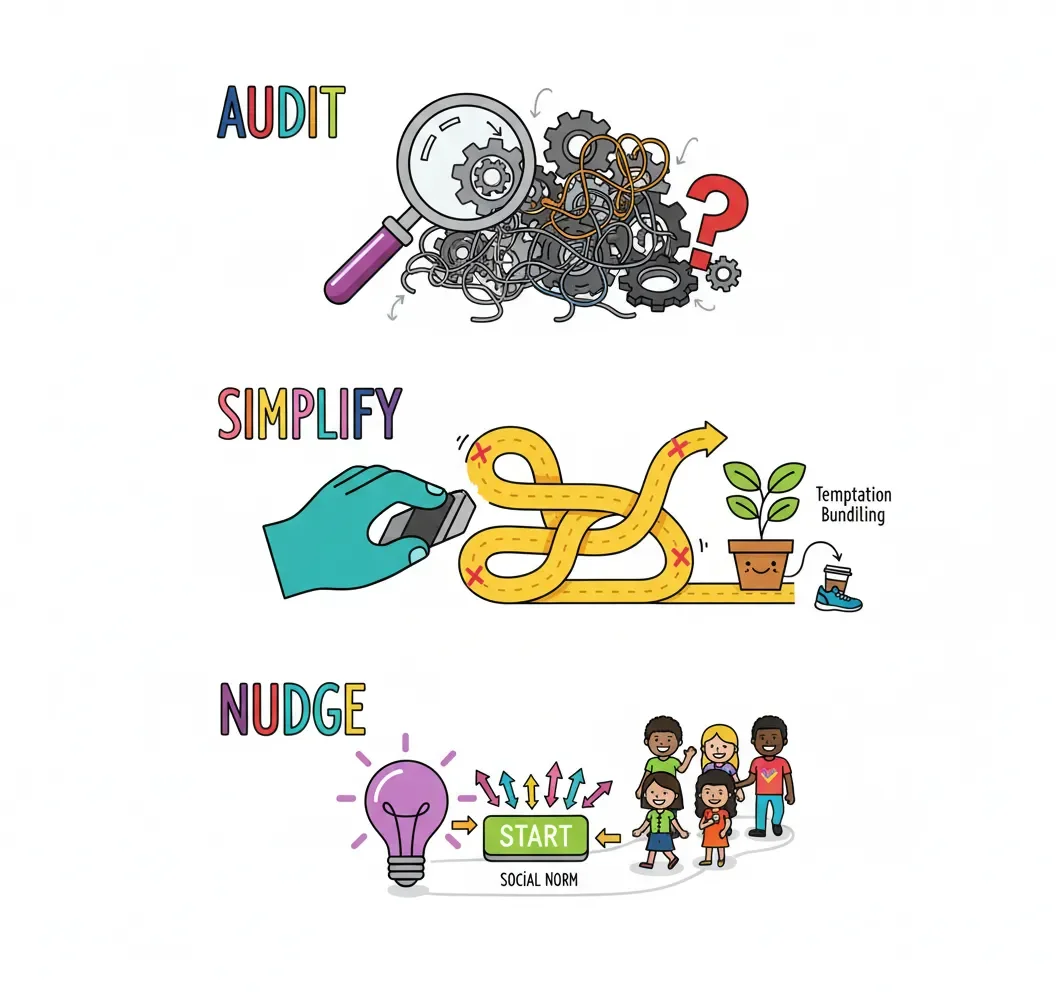
Removing friction means reducing obstacles with systematic, science-backed methods to make desired behaviors the path of least resistance. Here is how:
Audit: Conduct a Friction Audit to systematically spot barriers like time, effort, or confusion that hinder their goal. Ask, “What’s making this harder than it should be?”
Simplify: Use Cognitive Load Reduction to minimize mental or physical effort by streamlining steps, cutting choices, or pairing tasks with enjoyable activities via Temptation Bundling. Make the right action easy.
Nudge: Leverage Contextual Cues and Social Norm Nudges to prompt the right behavior with dynamic environmental triggers or group expectations.
REMOVE FRICTION In Action
Here are practical ways to apply this tool across relationships and goals,
Try a micro-challenge today to make growth effortless with friction-reducing techniques.
For Leaders
Common Problem: “My team struggles with adopting new processes due to complexity or unclear steps, draining their energy.”
Conduct a Friction Audit: Ask, “What’s slowing you down with this process?” identifying barriers like too many tools or vague instructions.
Simplify with Cognitive Load Reduction: Consolidate to one platform with a one-page guide, cutting mental effort, and apply Temptation Bundling by pairing tool setup with a team coffee break to make it enjoyable.
Nudge with Contextual Cues and Social Norm Nudges: Set dynamic reminders tied to their daily login time, “Check the guide at 9 AM,” and frame it as, “Most team members use this tool, it’s our standard,” leveraging group norms. This evokes relief by making the process feel effortless.
Micro-Challenge: Conduct a quick Friction Audit with a team member today (e.g., ask about a process struggle), simplify one barrier (e.g., reduce steps or bundle with a fun activity), and add a contextual cue (e.g., time-based reminder) or social norm nudge to ease action.
For Parents
Common Problem: “My child forgets or resists daily routines due to distractions or unclear expectations, creating stress.”
Conduct a Friction Audit: Ask or observe, “What’s making this routine hard?” spotting barriers like cluttered spaces or no clear start signal.
Simplify with Cognitive Load Reduction: Clear the workspace of distractions and set one simple rule, “Homework starts after snack,” reducing mental effort, then apply Temptation Bundling by pairing it with a favorite song during setup to make it fun.
Nudge with Contextual Cues and Social Norm Nudges: Place a visual timer at the snack spot as a dynamic start cue, and say, “Everyone in our family starts homework after snack, it’s how we roll!” aligning with norms. This evokes relief by smoothing the routine.
Micro-Challenge: Run a quick Friction Audit for a child’s routine today (e.g., observe a struggle), simplify one barrier (e.g., clear clutter or bundle with a fun element), and add a contextual cue (e.g., visual trigger) or social norm nudge to reduce resistance
Why It Works
The Science Behind Removing Friction

Friction Audits Pinpoint Barriers: Systematically identifying obstacles with Friction Audits reduces dropout rates by up to 40% when addressed, making growth easier (Milkman, How to Change, 2021-2023).
Cognitive Load Reduction Preserves Willpower: Minimizing mental or physical effort lowers stress on the prefrontal cortex, preventing decision fatigue and easing action (Huberman Lab, 2022).
Temptation Bundling Lowers Perceived Effort: Pairing hard tasks with enjoyable activities cuts friction by up to 30%, boosting completion via hedonic rewards (Milkman, Behavioral Science & Policy, 2023).
Contextual Cues 2.0 Drive Habits: Dynamic, time- or location-based triggers increase habit adherence by 25% by reducing situational barriers (Journal of Behavioral Decision Making, 2022).
Social Norm Nudges Align Behavior: Framing actions as group standards leverages conformity to cut resistance, especially in social settings (Social Influence, Cialdini, 2022).
Shaping the Path Evokes Relief: Dan Heath’s Switch (2010) shows simplifying environments motivates more than willpower. Modern tools like audits and cues help the brain predict ease over struggle (Barrett on emotion construction, 2017).
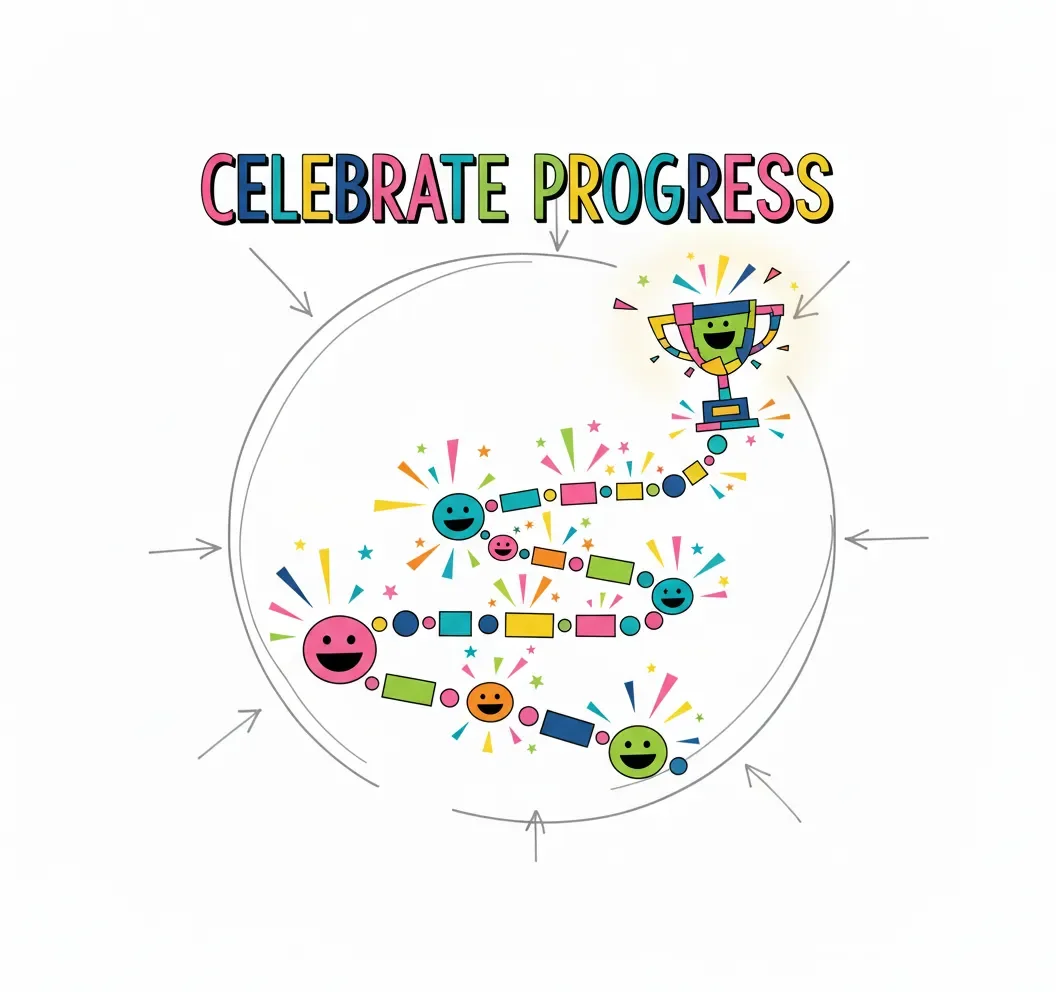
BACK: Celebrate Progress
Waiting for the big finish can drain motivation, but feeling the joy of progress keeps the momentum going.

NEXT: Shape The
Environment
Design spaces, systems, and cues that make new behaviors the default choice.