

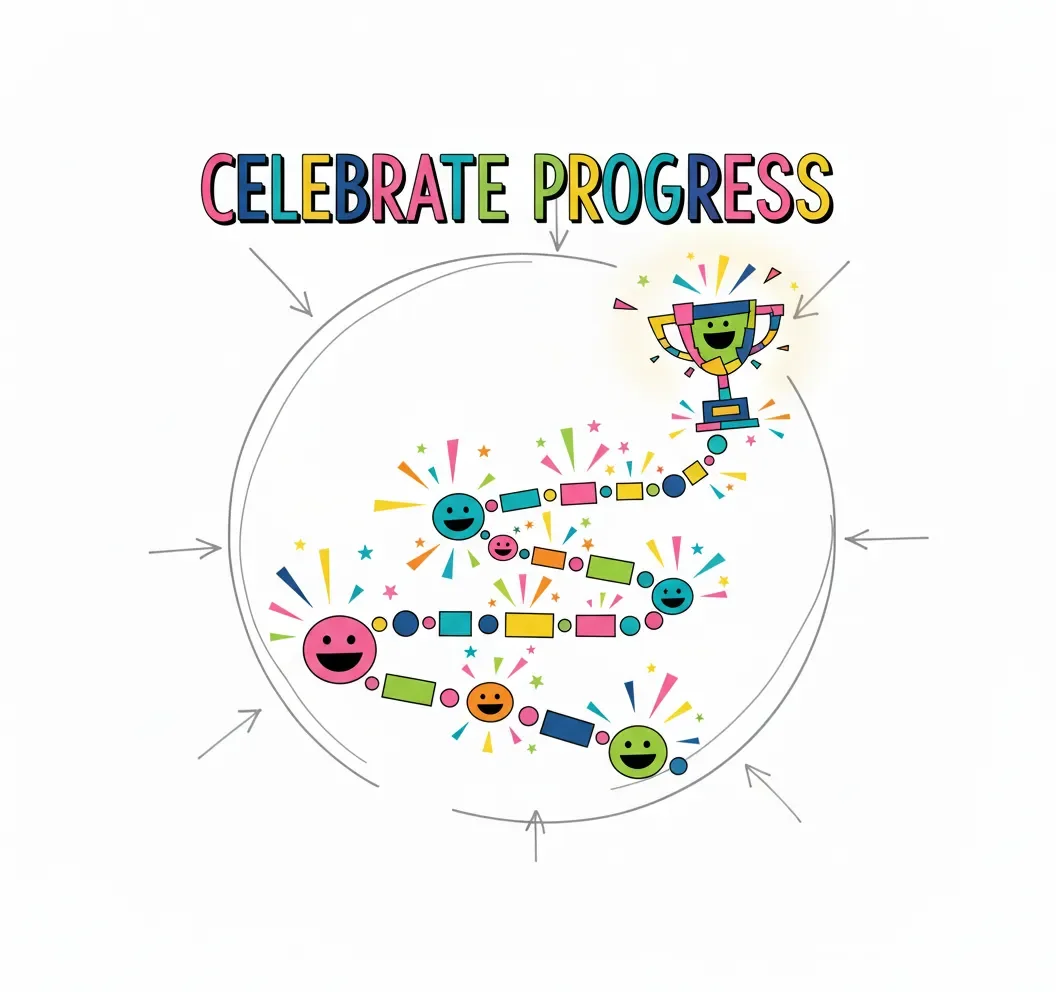
Celebrate Progress
Waiting for the big finish can drain motivation, but feeling the joy of progress keeps the momentum going. "Celebrate Progress" is about recognizing effort and showing how far they have already come.
Feeling Every Victory
*
Feeling Every Victory *
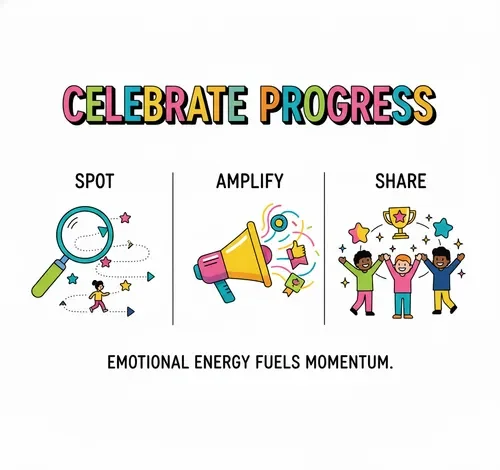
Quick Start Guide – Spot, Amplify, Share
Celebrating progress means spotlighting the process with emotional resonance to maintain drive. Here is how:
Spot: Actively look for micro-progress, e.g., small efforts, attempts, or improvements to find moments worth celebrating. Focus on daily or tiny steps and highlight how far they’ve come to trigger frequent reward loops.
Amplify: Use Savoring Interventions, a modern positive psychology technique, to heighten the emotional impact by reflecting on or expressing the win through vivid praise, storytelling, or gamified rewards like points or badges.
Share: Leverage Shared Joy Amplification to celebrate with others, boosting the reward through connection, whether with a group, family, or quick shout-out.
Celebrate Progress In Action
Here are practical ways to apply this tool across relationships and goals using.
Try a micro-challenge today to reinforce effort with innovative celebration techniques.
For Leaders
Common Problem: “My team loses steam when results take time or fixates on imperfections, missing smaller achievements.”
Use Spot to notice micro-progress like someone contributing a single idea in a meeting or finishing a small task, and frame their journey: “Look how many ideas you’ve already shared this month. This is another step forward!”
Amplify with a Savoring Intervention: Offer vivid praise, “I noticed you shared that idea today, let’s savor how it sparked our discussion; that’s a real step ahead!” and add a gamified touch like a point on a team progress board for extra reward.
Share with Shared Joy Amplification: Highlight it in a team update, “Let’s all cheer for this idea, it’s building our momentum!” to boost connection and reward neurologically.
Micro-Challenge: Spot one micro-effort by a team member today (e.g., completing a minor task), frame how far they’ve come, amplify it with vivid praise and a gamified element (e.g., a checkmark on a chart), and share it with the team (e.g., quick shout-out) to reinforce resilience.
For Parents
Common Problem: “My child feels defeated when tasks aren’t perfect or take too long, overlooking small steps.”
Use Spot to notice micro-progress like attempting a puzzle piece or starting a homework problem, and frame their journey: “Look how many pieces you’ve tried already—this is another great try!”
Amplify with a Savoring Intervention: Give heartfelt praise, “I saw you try that puzzle piece—let’s savor how hard you worked; that’s awesome!” and add a gamified reward like a sticker on a progress chart.
Share with Shared Joy Amplification: Celebrate with family, “Everyone, look, they tried that piece today; let’s celebrate together!” to enhance joy through connection.
Micro-Challenge: Notice one small effort by your child today (e.g., starting a chore), frame how far they have come, amplify it with emotional praise and a gamified touch (e.g., a sticker), and share it with family (e.g., a group cheer) to build their motivation..
Ideas to Inspire Celebration – Tips, Trackers, and Maps
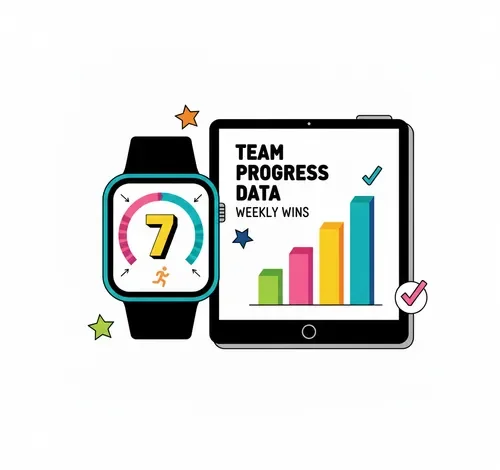
Digital Streaks and Data Tracking: Use apps or smartwatch features to log streaks or track real data on progress. Inspired by behavioral nudges this makes wins visible and data-driven.
Example: Log a completed task in a shared app like Asana or Trello, showing a streak of “3 tasks done this week, awesome!” or use a smartwatch to track productivity streaks. Share the data snapshot in a team chat for impact.
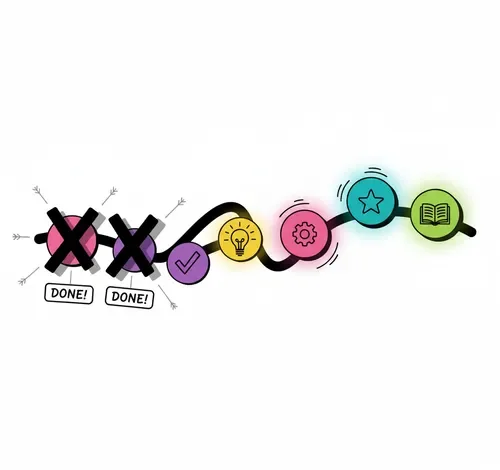
Interactive Task or To-Do Cross-Offs: Create a visual “task line” with lights or markers where each completed task lets them switch off a light or cross off an item, making progress visible.
Example: Set up a string of 5 small LED lights for a child’s chores, each chore done lets them turn off one light, “You’ve turned off 2 already - look how far you’ve come!” Or use a colorful to-do list to cross off items with a bold marker.
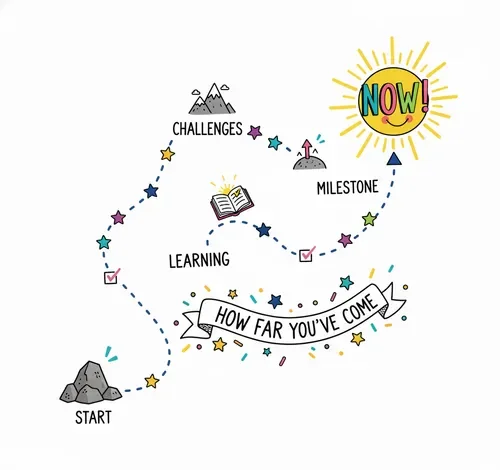
The ‘How Far You’ve Come’ Map:
Draw or describe a timeline for a team or kid showing their starting point and compare this with today - highlight what they have achieved.
Example: Sketch a timeline for a team, “We started with zero ideas in January; now in March, you’ve pitched 10 - look how far we’ve come!” or for a child, “You began with one word read; now you’re at 20, check this progress path!”
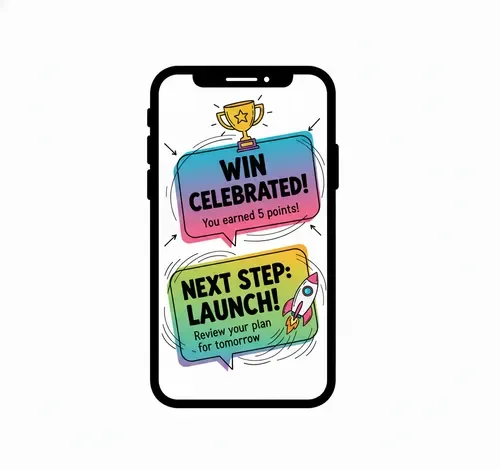
Quick Notifications or Messages: Send a quick digital note, text, or app notification with a celebrated win and a “next step” nudge to keep momentum, fitting modern communication.
Example: Message a team member, “Celebrating your report section today! Next, let’s aim for one more by Friday,” or text a child, “Great job starting homework! Tomorrow, let’s try two pages.”

WHY IT MATTERS
The Science Behind Celebrating Progress
Micro-Progress Fuels Motivation: Recognizing even tiny daily steps boosts morale more than waiting for final outcomes, with engagement increases up to 76% (Harvard Business Review, Amabile, 2021).
Dopamine Micro-Dosing Reinforces Action: Small, frequent celebrations trigger mini-dopamine releases, creating a sustained reward loop for behavior (Huberman Lab, 2022).
Savoring Enhances Emotional Impact: Intentionally reflecting on or expressing wins through Savoring Interventions doubles their positive effect on resilience (Journal of Positive Psychology, Bryant, 2023).
Gamification Boosts Engagement: Turning progress into a game with points or badges increases persistence by 30-40% through intrinsic rewards (Behavioral Science & Policy, Milkman, 2023).
Shared Joy Amplifies Reward: Celebrating with others activates stronger neural reward responses, enhancing motivation via bonding (Social Cognitive and Affective Neuroscience, Eisenberger, 2022).
Overcoming Negativity Bias: Our natural negativity bias, focusing on flaws over wins, makes celebration feel counterintuitive or excessive (Rozin & Royzman, 2001). Yet, intentional recognition, as Dan Heath’s Switch (2010) shows with evoking pride or relief, rewires focus to positivity, predicting ongoing drive (Barrett on emotion construction, 2017).
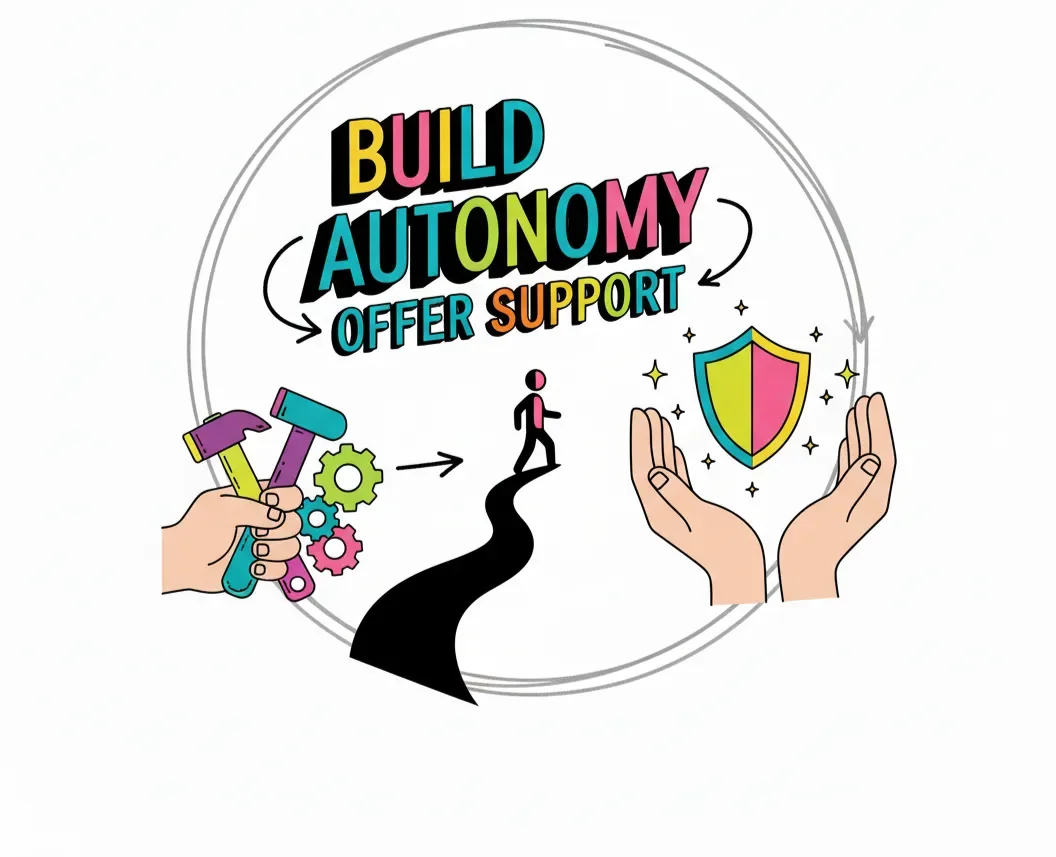
Back: Build Autonomy
People thrive when they feel trusted to build path knowing they are not alone.

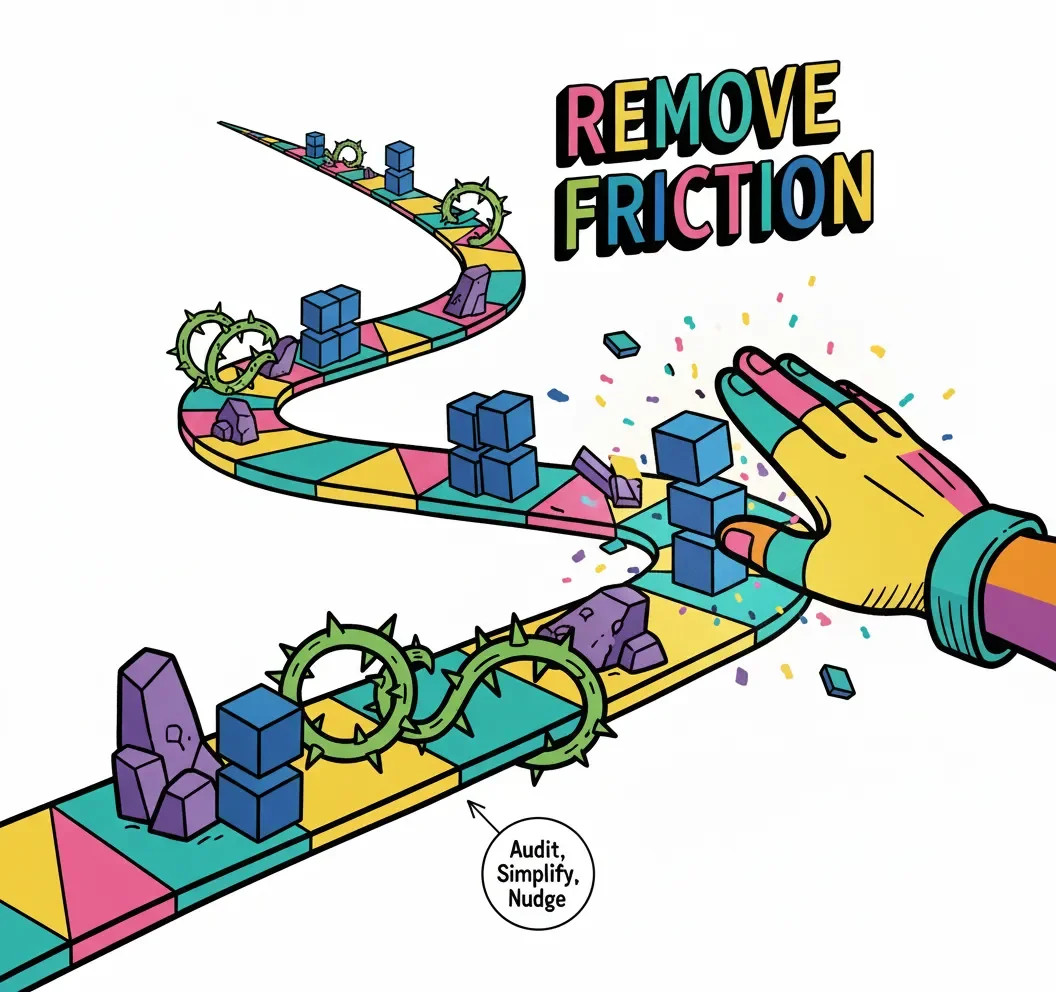
Next: Remove Friction
Even the strongest motivation falters when obstacles clutter the path.