

Shrink the Change – Spark Growth with Tiny, Doable Steps
When a goal feels too big, even the first step can seem impossible, because large tasks overwhelm our brain. “Shrink the Change” is about breaking down daunting challenges into ridiculously small, doable actions that ignite momentum. It’s about tiny wins that build confidence. As part of the “Seed – Spark the Beginning”-stage, and inspired by Dan Heath’s Switch, we include newest research to make change feel easier and spark action.
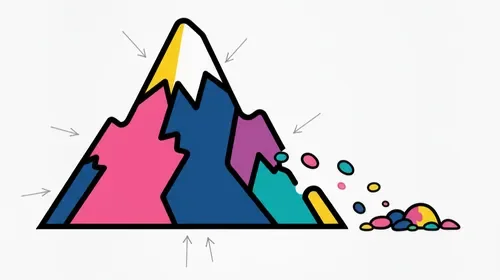
Let’s shrink the mountain into a molehill or milestones into pebbles.
A Quick Guide: Slice, Simplify, Succeed
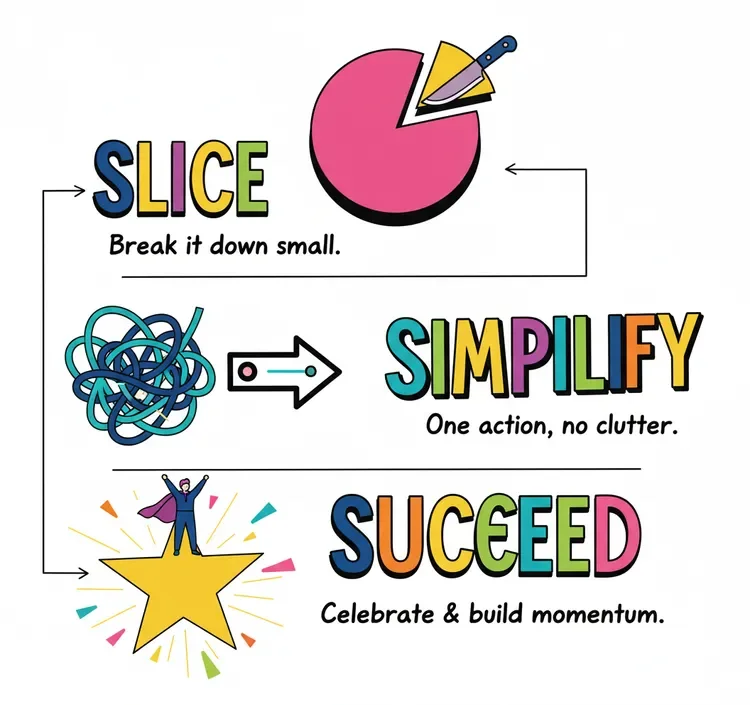
Shrinking the Change is about making a big goal feel small and approachable to ignite action. Here is how we can guiding take their first step without overwhelm:
Slice: Break the larger goal into a ridiculously small first action - something so tiny it feels almost trivial.
Simplify: Remove barriers or complexity from that small step to make it effortless. Focus on one action, avoiding multiple choices.
Succeed: Celebrate the completion of that tiny step to build confidence and trigger momentum.
Get started with a step-by-step worksheet to break down goals and spark action.

Shrink the Change In Action
For Leaders
Common Problem: My team is overwhelmed by a large project deadline and resists commiting to objectives.
Shrink Strategy: Slice the project into a micro-task for this week. Say, “I understand this might be overwhelming, let us write down the 3 main things that stand in our way and think about possible solutions within the next 15 minutes.” Celebrate the outcome of this session.
Micro-Challenge: Pick one team goal today and shrink it to a 5-minute task (e.g., “email one idea”) and acknowledge the effort immediately.
For Parents
Common Problem: “My child does not want to do homework.”
Shrink Strategy: Slice the task into a tiny first action. Say, “Let’s take this step by step and only focus for now on the first exercise that will take a couple of minutes.” You can remove barriers by providing the pen or offer support sitting with them. Celebrate the outcome of this win.
Micro-Challenge: Choose one routine task today and shrink it to a 1-2 minute action for your child (e.g., “put one toy away”), then celebrate the win with a high-five.
Small Wins Trigger Dopamine for Motivation: Completing tiny tasks releases dopamine, a neurotransmitter tied to reward, reinforcing motivation with quick success (Huberman, 2021). Shrinking a goal creates micro-wins that build confidence to continue.
Reduced Scope Lowers Perceived Effort: Behavioral science shows that smaller tasks feel less daunting, bypassing resistance to large efforts (Fogg, 2019, Tiny Habits). Slicing goals into micro-actions makes starting effortless, overcoming inertia.
Action Over Intention Builds Habits: Research on habit formation reveals that starting with small behaviors creates momentum faster than big plans (Lally et al., 2009; Clear, 2018, Atomic Habits). Shrinking prioritizes “doing” over “thinking,” sparking progress.
Clarity Combats Decision Paralysis: As Dan Heath notes in Switch, unambiguous, small steps cut through overwhelm by limiting choices (Heath & Heath, 2010). A single, clear micro-task avoids decision fatigue, making action easier.
Fresh Starts and Gamification Boost Engagement: Temporal landmarks (e.g., Monday) enhance motivation for small steps (Milkman, 2021, How to Change), while gamified micro-goals with rewards increase buy-in (Nicholson, 2015).

Why It Works
The Science Behind Shrinking the Change

NEXT: Create First Wins
Design a quick, visible success to boost their belief in themselves. Early wins energize and prove progress is possible.


BACK: Point to the Destination
Paint a vivid, inspiring picture of what success looks like. Clarity reduces fear and fuels hope.