

The Feeling Hunt
*
The Feeling Hunt *
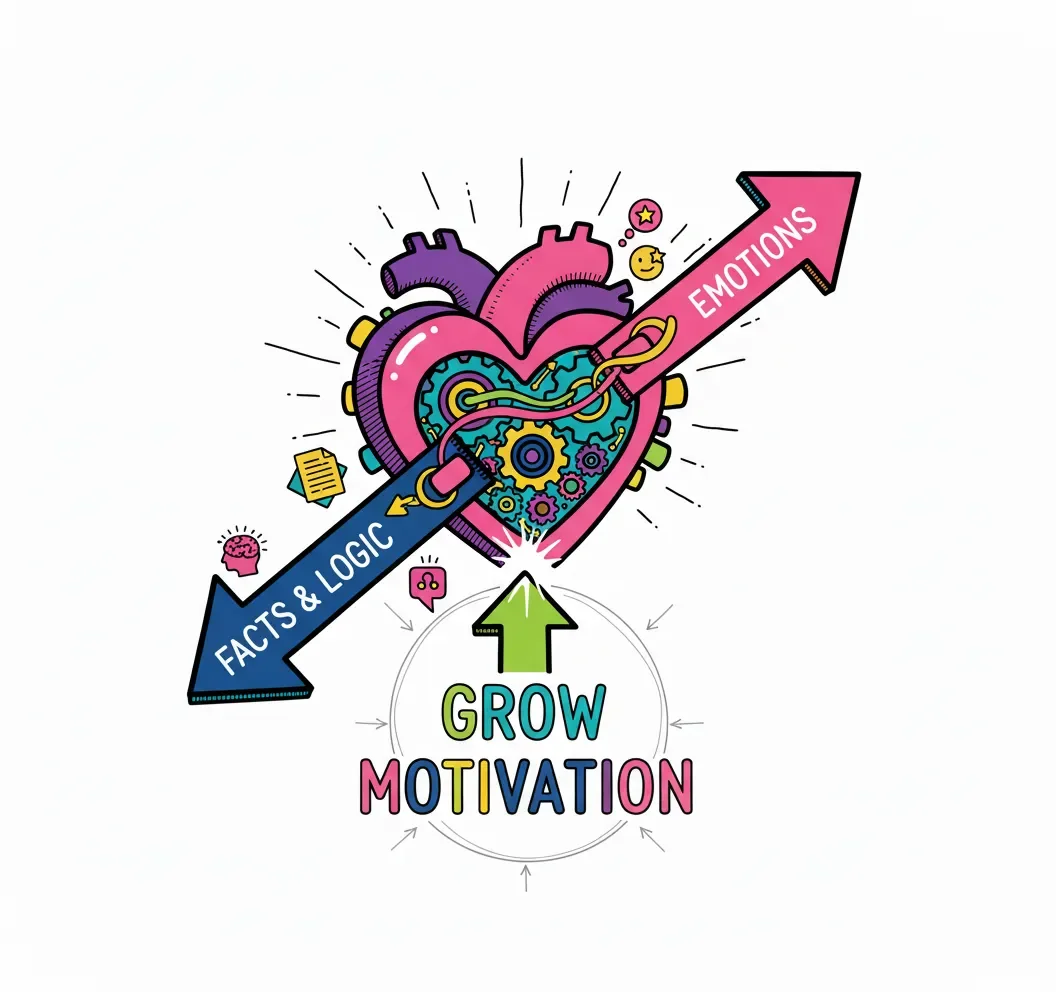
Grow Motivation, Not Just Knowledge
Knowing ≠ Doing. Facts and logic alone won’t spark lasting change, but pair it with emotions and you will be onto something... "Grow Motivation" is about tapping into the heart of what drives people by finding the feeling that fuels their desire to act, as inspired by Dan Heath’s Switch and the newest science that shows that emotions aren’t just reactions, they’re predictions we can shape. Let’s go beyond “knowing” to create a powerful emotional pull or push that makes growth possible.
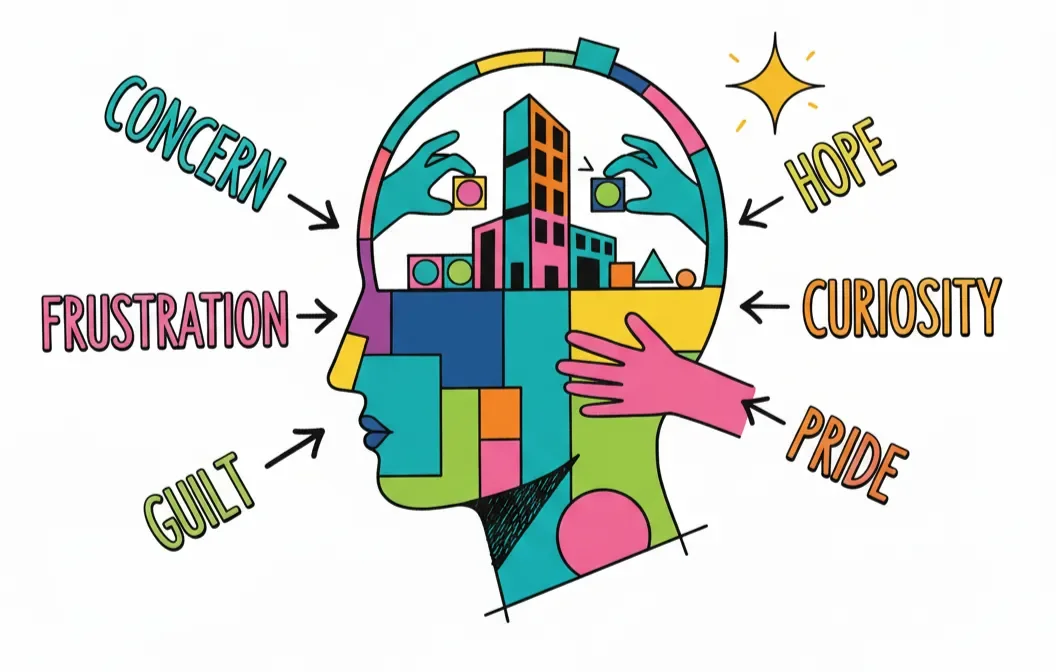
You Can’t Motivate Others! Or Can You?
Contrary to the belief that “you can’t motivate others,” think of yourself as an Emotion Architect. You can’t force drive, but you can reflect and amplify their inner emotions by curating experiences, stories, and contexts that help them predict positive feelings about action. Manipulation? I see it as a co-creation of an emotional environment where their brain forecasts success or joy, drawing on Barrett’s theory. We can use push emotions (e.g., guilt) to spark urgency by addressing pain points, and pull emotions (e.g., pride) to sustain effort with aspiration. For instance, if I pair a task with a memory of frustration to ignite action, or a vision of curiosity to maintain momentum. This empathetic approach focuses on emotional prediction over persuasion.
Quick Start Guide:
Feel - Frame - Forecast
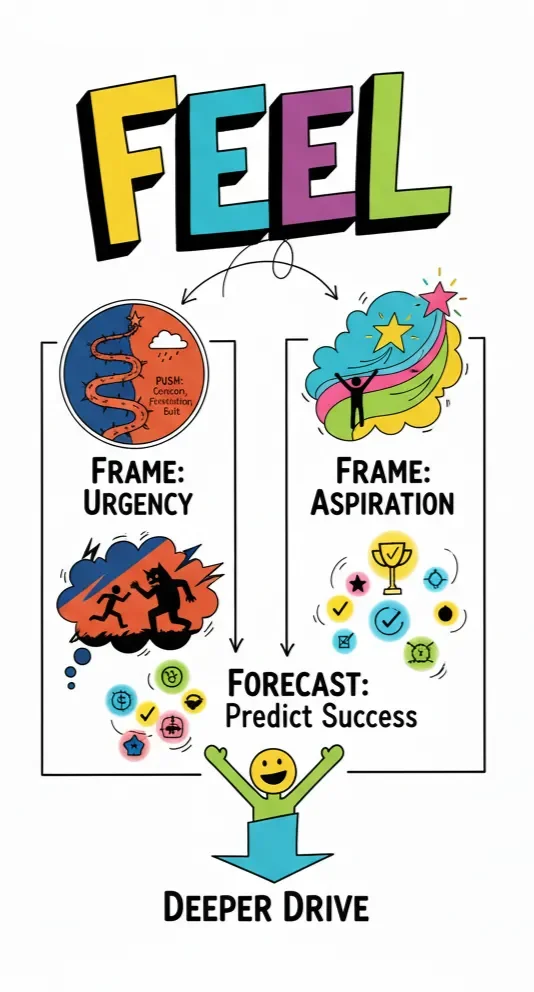
Growing motivation means connecting to emotions in a way that sparks action by crafting the right feelings. Emotions can push (e.g., concern, frustration, guilt) by creating discomfort with the status quo, or pull (e.g., hope, curiosity, pride) by drawing toward a desired future. Here’s how to guide someone to a deeper drive, using Heath’s “Find the Feeling” and insights on emotion prediction:
Feel: Uncover the emotion tied to their goal. Ask, “What would achieving this make you feel? Proud, relieved, excited? What do you fear or regret if it doesn’t happen?” Identify if it’s a push emotion (discomfort to escape) or pull emotion (reward to gain).
Frame: Craft a vivid, emotional narrative or image around their goal to amplify that feeling, tailored to whether it’s push or pull. Use language that makes the emotion real and urgent.
Forecast: Shape their emotional prediction by creating positive contexts or small experiences that help their brain anticipate joy or relief in taking action. Reinforce with reminders of past wins or safe spaces to act.
Grow Motivation In Action
Here are practical ways to apply this tool across relationships and goals.
Try a micro-challenge today to ignite emotional momentum with a push or pull focus.
For Leaders
Common Problem: “My team knows the importance of a goal but is not committed fully.” Motivation Strategy:
Feel by asking: “What would nailing this project make you feel? (Respected? Unstoppable?) What frustrates or worries you if we fall short?” Identify push or pull.
Frame accordingly: For frustration (push), “Imagine finally breaking free from these delays by acting today.” For pride (pull), “Picture the CEO shaking your hand, beaming with respect for your innovation.”
Forecast with a past link and safe step: For push: “Recall that frustration of missing out. Let’s brainstorm one idea now to dodge that.” For pull: “Remember that proud moment of a win. Let’s start small to feel it again.”
Micro-Challenge: Ask a team member today, “What feeling (frustration to avoid or pride to gain) would drive you on this goal?” Frame their next task with that push or pull emotion and a small, safe step.
For Parents
Common Problem: “My child understands why a task matters but has no motivation doing it.” Motivation Strategy:
Feel by asking: “How would finishing homework early make you feel? (Free to play? Proud?) What bugs you if it’s not done?” Identify push or pull.
Frame accordingly: For guilt (push), “Imagine losing that heavy feeling of falling behind by starting now.” For curiosity (pull), “Picture diving into your game sooner, feeling excited with extra time!”
Forecast with a memory and easy start: For push, “Remember feeling bad about late work? Let’s do one problem to skip that.” For pull, “Recall the fun of finishing early? Let’s try one question for that feeling.”
Micro-Challenge: Ask your child today what feeling (guilt to avoid or hope to gain) they would get from a task, then frame it with that push or pull emotion and a tiny, safe action.
Why It Works
The Science Behind
Emotions Drive the Elephant: Dan Heath’s Switch (2010) shows that tapping into feeling motivates far more than rational arguments. Finding the feeling connects the heart to action, fueling the emotional Elephant.
Push and Pull Shape Motivation: Push emotions (concern, frustration, guilt) create urgency to escape discomfort, while pull emotions (hope, curiosity, pride) inspire pursuit of reward (Dr. Heidi Grant Halvorson on goal pursuit, 2011). Both drive change uniquely.
Emotions Are Predictions, Not Reactions: Dr. Lisa Feldman Barrett (How Emotions Are Made, 2017) reveals emotions are constructed by the brain as predictions based on past experiences and context. Framing goals with push or pull emotions helps predict relief or joy, shaping motivation.
Intrinsic Motivation Unlocks Drive: You can cultivate motivation by connecting to personal values and emotions fulfilling needs for meaning (Deci & Ryan, Self-Determination Theory, 2000).
NEXT: Build Autonomy
People thrive when they feel trusted to build path knowing they are not alone.


BACK: Create First Win
Design a quick, visible success to boost their belief in themselves. Early wins energize and prove progress is possible.